


 English
 русский
 中文简体
中文简体 عربى
عربى
Across many production and maintenance environments, 80 staples have become associated with consistency and interchangeability. Rather than representing a single product, this designation commonly refers to a standardized format used in a wide range of fastening tasks. As manufacturers seek to streamline inventory management and improve tool compatibility, standardized staples play an increasingly practical role in everyday operations.
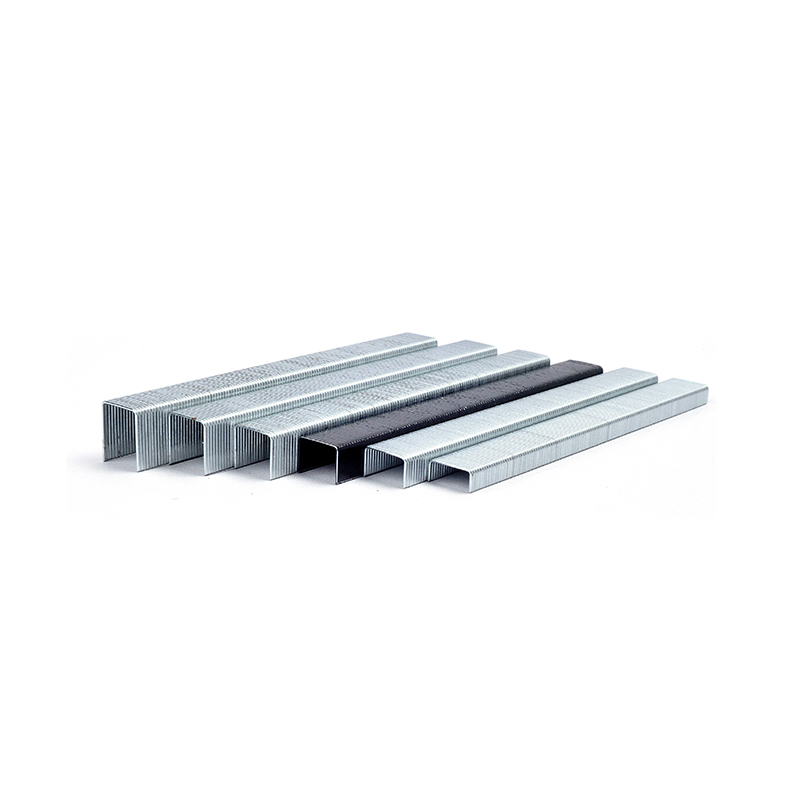
One important advantage of standardized fastening formats is reduced complexity in procurement. When workshops and factories rely on a common staple size, they can limit the number of fastener types kept in storage. Fewer stock-keeping units simplify ordering processes, reduce the risk of shortages, and make it easier to manage storage space efficiently.
Another area where standard formats show value is maintenance and equipment uptime. Tools designed for 80 staples are manufactured to accommodate uniform crown width and leg dimensions, which helps ensure consistent feeding during operation. In production settings, even brief tool interruptions can accumulate into noticeable downtime over the course of a shift. Operators using standardized staples often report fewer feeding issues and reduced need for tool recalibration, contributing to more stable daily output.
Training efficiency also benefits from standardization. New workers can be trained on a single fastening system rather than learning multiple staple formats and tool adjustments. This is particularly helpful in industries with seasonal labor patterns or frequent staff changes. Training supervisors have observed that simplified fastening systems can shorten onboarding time by several hours per employee, allowing new hires to reach basic productivity levels more quickly.
From a performance perspective, 80 staples are commonly used in applications that balance holding strength with material impact. They are frequently selected for light to medium-duty fastening in furniture components, interior panels, drawer assemblies, and packaging inserts. Their dimensions provide sufficient grip while reducing the likelihood of surface damage or material splitting. This versatility allows the same staple format to be used across multiple departments without requiring changes in equipment or fastening technique.
Standardized staples also support quality consistency across product lines. When the same fastening format is applied across different assemblies, manufacturers can maintain uniform performance characteristics such as penetration depth and holding behavior. This consistency simplifies quality documentation and helps reduce variation in finished products. In regulated or quality-sensitive environments, predictable fastening outcomes contribute to smoother inspection and approval processes.
In everyday industrial practice, 80 staples represent more than a technical specification; they reflect a preference for simplicity, compatibility, and predictable results. By supporting efficient inventory control, reliable tool performance, and consistent training outcomes, 80 staples continue to occupy a stable position in modern fastening systems.
FAQ
Q1: What does “80 staples” usually refer to?
It typically indicates a standardized staple format designed for compatibility across specific tools.
Q2: Are they suitable for heavy-duty applications?
They are generally used for light to medium-duty fastening tasks rather than structural applications.
Q3: Do standardized staples reduce costs?
They can help lower inventory complexity, training time, and tool maintenance-related expenses.
Q4: Are they interchangeable across brands?
Many tools are designed around standardized formats, though compatibility should always be verified.
Q5: In which automotive applications are 80 series staples commonly used?
80 series staples are often used in automotive interior assembly, such as securing fabric, insulation layers, and trim components. They help attach seat coverings, door panel backings, and acoustic materials where consistent fastening and controlled penetration are required.

 Quick Links
