


 English
 русский
 中文简体
中文简体 عربى
عربى
A carton stapler starts jamming after a supplier change. The new staples look almost identical to the ones used before, and the product description seems to match. Yet the machine no longer runs as expected. In a packaging operation, this kind of problem can turn a routine consumables purchase into an issue that needs attention from both production and purchasing teams.
The difference between Carton Closing Staples and standard industrial staples often comes down to their intended use and the equipment they are made for. One group is designed for closing cartons, while the other covers a broad range of fastening jobs. Similar appearances do not guarantee that the products can replace one another.
For companies buying fasteners in bulk, knowing what separates these products makes it easier to compare quotations, check samples, and discuss requirements with a manufacturer.
The Difference Starts with the Material Being Fastened
Not every staple is designed to do the same job. A furniture workshop may use staples to attach fabric to a wooden frame. A company producing insulation panels may need a fastener suited to a different material altogether. On a packaging line, the task is usually to join overlapping flaps of corrugated cardboard.
These applications place different demands on the staple.
Carton-closing fasteners need to work with the board structure and the stapling equipment used to form the closure. General industrial staples may be designed around penetration into wood, attachment to a supporting surface, or the need to hold a particular material in position.
That difference affects the product's dimensions and construction. Crown width, leg length, wire profile, and feeding format all need to be considered in relation to the intended application.
It is easy to overlook these details when comparing catalogue listings. The practical difference becomes clearer when the fastener is loaded into a tool and used on the actual material.
What Do Buyers Need to Look at Beyond Appearance?
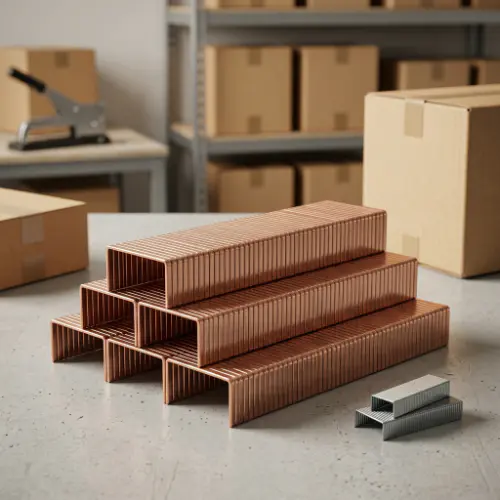
A product photograph can help identify a general staple type, but it cannot establish whether the fastener will work with a particular machine.
Two staples may have a similar shape while differing in dimensions or construction. Even a small variation can matter if the equipment is designed around a specific staple reference.
| Feature | What It Means for Carton Closing |
| Crown width | Needs to suit the carton joint and stapling mechanism |
| Leg length | Must be appropriate for the board structure and fastening method |
| Wire profile | Should match the intended staple design and equipment |
| Material and finish | Depend on product requirements and storage conditions |
| Staple arrangement | Must suit the machine's feeding system |
These details are related, so it rarely makes sense to judge a staple by one feature alone. A product with a suitable leg length may still be incompatible with the machine if its crown or wire profile differs from the required design.
For an established packaging line, the existing staple reference is a useful starting point. If the carton, equipment, or fastening method has changed, the original specification may need to be reviewed.
Why the Wrong Staple Can Create Trouble on a Packaging Line
When a staple feeds properly and closes the carton as intended, operators may have little reason to think about it. The situation changes when feeding becomes unreliable or the finished closures start to vary.
A jam is one possible sign of a compatibility problem, but it does not tell the whole story. Incorrect loading, worn machine components, unsuitable settings, or damage to the staple strip can produce similar symptoms.
The same applies to a carton that does not close properly. The fastener may be unsuitable, but the board construction and clinching mechanism also deserve attention.
A useful way to investigate is to compare the current product with the previously approved supply. Check the reference and dimensions, inspect the feeding path, and confirm that the machine is being used according to its instructions. If the carton material has changed, that should be part of the investigation too.
This is particularly relevant when a purchasing department is trying a lower-priced alternative. A quotation may look attractive, but the product still needs to perform as required on the production line. Testing a sample before approving a larger order can help identify problems without committing the entire purchase to an unverified option.
Crown Width and Leg Length Are Not Just Catalogue Details
These two dimensions often come up when buyers discuss carton-closing fasteners with a supplier. They are not simply numbers to copy from a product sheet; they relate directly to the joint being formed.
The crown bridges the material being fastened. Its dimensions must suit the carton closure and the machine's design. A staple used for upholstery, for example, may have a crown intended for securing fabric against a frame. That does not mean it will form the intended closure on a corrugated box.
Leg length presents a different consideration. Corrugated cartons vary in construction, and the layers being joined may differ between applications. A staple needs to suit that structure and the way the equipment drives and closes it.
Choosing longer legs does not automatically solve a fastening problem. Nor does a wider crown guarantee a suitable result. The complete staple design, the carton, and the machine have to work together.
If the correct specification is unclear, provide the manufacturer with the carton details and the equipment model. An existing sample can also help identify the product under consideration, although its dimensions and compatibility should still be verified.
Are Strip Staples and Coil Staples Interchangeable?
The answer depends on the stapler. Some carton-closing equipment accepts joined strips of staples, while other systems are designed for staples supplied in coils.
Strip staples are arranged in straight sections that can be loaded into compatible equipment. Coil staples use a rolled arrangement intended for machines that support that format. Each design follows the feeding requirements of the equipment for which it is made.
For a company already operating a packaging line, changing the supply format may involve more than choosing a different product listing. The machine must accept the new arrangement, and the staple specifications must still match the application.
A buyer considering a change should confirm the required format before requesting samples. This is also a useful point to raise when discussing replacement products with a new manufacturer.
Does Material or Surface Finish Affect the Choice?
It may, depending on where the staples will be stored and how they will be used.
Industrial staples can be supplied in different materials and finishes. The available options depend on the product range and manufacturing specifications. A buyer should explain any relevant storage or environmental conditions rather than selecting a finish based on colour or appearance.
For example, packaging supplies kept in a warehouse with moisture exposure may require a different review from supplies stored in a dry, controlled area. The suitable material and finish should be assessed against the actual requirements, while storage and handling practices also need attention.
If a customer has specific material requirements, these should be agreed before production. Where supporting documentation is needed, its availability should be confirmed during the quotation stage.
What Should You Tell a Manufacturer Before Requesting a Quote?
A short description of the application can prevent a great deal of back-and-forth communication. Simply asking for carton staples may not give a supplier enough information to identify the required product.
Start with the equipment model and the staple reference currently in use, if available. Add details about the carton material and the intended application. If the purchase is for a new packaging line, explain that as well.
The discussion can then focus on the questions that affect the order:
- Does the proposed staple match the machine's requirements?
- Which dimensions and wire profiles are available?
- Can samples be supplied for a production trial?
- What material and finish options are offered?
- How are product specifications checked during manufacturing?
- Can repeat orders follow the approved specification?
For recurring purchases, keeping a record of the approved sample and product reference makes future orders easier to manage. If a problem arises with a later delivery, the purchasing team has a clear basis for comparison.
This information is also useful to the manufacturer. Instead of guessing which product might fit, the supplier can assess the request against the customer's stated requirements.
When Is a Carton Closing Staple the Suitable Option?
It depends on how the package is designed and how it will be closed.
A business shipping products in corrugated cartons may use mechanical stapling as part of its established packing process. In that case, a compatible carton-closing staple can support the existing workflow. A furniture manufacturer attaching fabric to a frame has a different job and needs a fastener designed for that application.
Tape and adhesive may also be appropriate for certain cartons. Factors such as package construction, handling conditions, equipment, and internal packaging procedures influence the decision.
There is no need to treat every closure method as a direct substitute for another. The useful comparison is between methods that meet the actual requirements of the package.
For buyers, this means confirming the job before comparing products. It also gives manufacturers a clearer understanding of the application when discussing available specifications or sample testing.
Making the Purchasing Decision
The difference between carton-closing and standard industrial staples is not simply a matter of naming. Their designs may differ because the materials, equipment, and fastening tasks are different.
A product that works in one application should not be assumed to work in another. Checking the staple reference, machine requirements, carton construction, and feeding format provides a sound basis for evaluating a replacement or new supply.
For a manufacturer, the discussion should begin with the customer's actual requirements. Product specifications, sample evaluation, and clear agreement on the approved type help both parties understand what is being ordered.
When sourcing carton-closing fasteners, a useful first step is to identify the staple currently in use and explain the packaging process to the supplier. That gives the conversation a practical starting point and helps avoid choosing a product on appearance alone.

 Quick Links
