


 English
 русский
 中文简体
中文简体 عربى
عربى
Why are staple series differences important in real applications?
Fastening systems often look similar at glance. Many users see only a small metal component and assume performance is interchangeable. In practice, different staple series are designed with distinct usage conditions in mind.
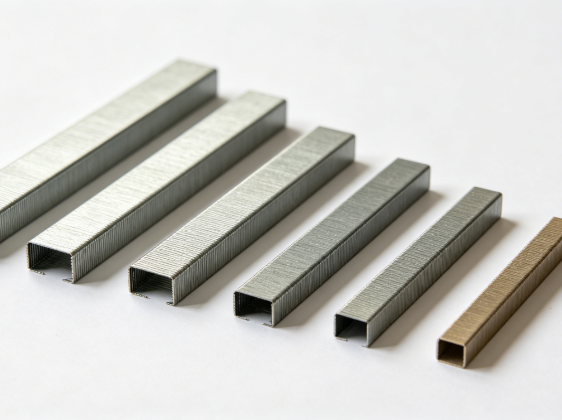
N100 Staples are part of a wider family of fastening solutions used in packaging, light industrial assembly, and material bundling. Comparing them with other staple series helps clarify where each type fits in real workflows.
These differences are not only about size. They involve compatibility, handling behavior, and how materials respond during fastening.
What defines the position of N100 staples in the product range?
Staples are generally used in environments where stable fastening and consistent output are required. They are often selected for repetitive operations where materials must stay securely joined during handling and transport.
Compared to smaller or lighter series, staples tend to be used in slightly more demanding packaging tasks. Compared to heavier industrial staples, they remain focused on controlled and lightweight applications.
This middle positioning makes them adaptable across multiple workflows without requiring major equipment changes.
How do N100 staples differ from lighter staple series?
Lighter staple series are usually designed for thin materials and simple binding tasks. They work well with paper sheets, light packaging, or temporary fastening.
Staples offer more holding stability in comparison. They are better suited for layered materials and packaging structures that require stronger retention during movement.
| Feature Area | Lighter Staples | N100 Staples |
|---|---|---|
| Material range | Thin paper and light sheets | Paperboard and layered materials |
| Holding strength | Basic fastening | More stable retention |
| Application type | Simple binding | Packaging and assembly tasks |
| Workflow use | Short-term use | Repeated handling environments |
The difference is not only strength. It also relates to how consistently they perform in continuous use.
How do N100 staples compare to medium-duty staple series?
Medium-duty staples often sit close to staples in usage scenarios. Both are used in packaging and light industrial environments. The difference appears in handling balance and material adaptability.
Staples tend to focus more on stable repeat use. They are often chosen where consistency across multiple cycles matters.
Medium-duty series may offer broader material flexibility in some cases, but staples are often preferred when uniform performance is required over time.
The choice between them often depends on workflow structure rather than a single material factor.
What differences appear when compared to heavy-duty staples?
Heavy-duty staples are designed for stronger materials and more demanding fastening needs. They are used where thicker structures or rigid materials require deeper penetration and stronger holding force.
N100 staples do not aim to replace this category. Instead, they operate in a lighter range of applications where full heavy-duty strength is not necessary.
The key distinction lies in application environment. Staples are more aligned with packaging lines and repetitive assembly tasks, while heavy-duty staples are used in structural or reinforced fastening scenarios.
How does material compatibility vary across staple series?
Material compatibility is one of the important comparison points between staple series. Different staples respond differently to paper, board, film, and mixed layers.
Staples are often used with materials that require balanced fastening without excessive pressure. This includes layered paper products, packaging boards, and flexible combinations.
| Material Type | Lighter Staples | N100 Staples | Heavy Staples |
|---|---|---|---|
| Paper sheets | Suitable | Suitable | Sometimes excessive |
| Paperboard | Limited | Stable use | Strong use |
| Plastic film | Basic hold | Controlled hold | Risk of damage |
| Mixed layers | Weak stability | Moderate stability | Strong but less flexible |
This comparison shows that Staples often sit in the middle of compatibility and stability.
How do handling conditions influence staple selection?
Real-world environments are rarely uniform. Packaging lines, storage conditions, and manual handling all influence fastening results.
Staples are often chosen for environments where repeated handling is expected. Their behavior tends to remain stable across multiple operations.
Lighter staples may show variation under repeated stress. Heavier staples may be less flexible in fast-moving workflows.
This makes Staples suitable for balanced conditions where both speed and consistency matter.
What role does tool compatibility play in differences between series?
Staple performance is closely linked to the tools used to apply them. Even small differences in staple series can affect feeding behavior and alignment.
Staples are designed to work with compatible fastening tools that support steady operation. When matched correctly, they help maintain smooth feeding and consistent placement.
Other staple series may require different tool settings or handling adjustments. This can affect workflow efficiency if mismatched.
Tool compatibility often becomes a deciding factor in real applications.
How does workflow design influence staple series choice?
In many industrial environments, staple selection is not based on a single factor. It is influenced by workflow design, material flow, and handling speed.
Staples are often used in structured processes where repetitive fastening is part of the daily operation. They support consistent output without frequent adjustments.
Other series may be chosen when flexibility or specialized fastening is required. The decision often depends on how materials move through the process rather than isolated performance.
| Workflow Factor | Lighter Series | N100 Series | Heavy Series |
|---|---|---|---|
| Speed-focused tasks | High suitability | Stable suitability | Lower suitability |
| Repetitive use | Moderate | Strong consistency | Strong but slower |
| Material variation | Limited | Moderate | High strength focus |
Why are comparisons between staple series still relevant?
Even with modern packaging systems, manual and semi-manual fastening remains common. Different staple series continue to serve distinct roles within these environments.
N100 staples represent a balanced position in the range. They are neither the lightest nor the strongest option, but they support consistent use across a wide set of packaging tasks.
Understanding how they compare with other series helps users choose based on workflow needs rather than assumptions.
The differences are not about superiority. They are about matching the right fastening behavior to the right working condition.

 Quick Links
