


 English
 русский
 中文简体
中文简体 عربى
عربى
Why are 80 Staples still widely discussed in fastening applications?
Fastening methods are often overlooked, yet they play a quiet role in packaging, assembly, and light industrial work. Among different fastening options, staples are commonly used because they support a wide range of materials without requiring complex equipment or preparation.
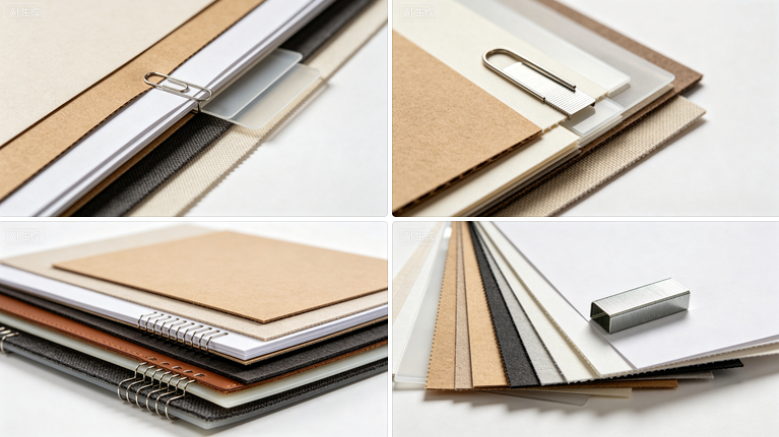
Their value lies in simplicity. They help join materials quickly and hold them in place during handling, storage, or transport. In many workflows, this small component supports larger processes that depend on stability and speed.
Understanding what materials can be fastened with staples helps clarify where they fit in practical applications.
Can paper-based materials be fastened with 80 staples?
Paper is one of the common materials used with staples. This includes single sheets, stacked documents, and layered paper structures used in packaging or labeling.
The fastening process is straightforward. The staple passes through the paper layers and holds them together with consistent pressure. This helps prevent shifting during handling.
In packaging environments, paper-based materials often need temporary or semi-permanent fastening. Staples provide a simple solution without changing the structure of the material.
Paper-based use cases are not limited to office environments. They also appear in production settings where documentation or packaging inserts need to remain aligned.
How are cardboard and paperboard materials supported by 80 staples?
Cardboard and paperboard are thicker than standard paper, but they still work well with staples when used correctly. These materials are often part of packaging boxes, protective layers, or structural inserts.
Staples help secure folded edges and overlapping sections. This keeps the structure stable during transport and storage.
In packaging workflows, cardboard is frequently handled in large volumes. Fastening needs to be quick and consistent. Staples support this requirement by providing repeatable holding strength across multiple units.
| Material Type | Common Use Case |
|---|---|
| Paper sheets | Bundling and labeling |
| Paperboard | Packaging reinforcement |
| Cardboard panels | Box assembly and sealing |
These materials benefit from staples because they maintain structure without adding extra bulk.
Can thin plastic films and sheets be fastened with 80 staples?
Thin plastic films and flexible sheets can also be used with staples in certain applications. These materials are often found in packaging protection layers or covering systems.
Staples help secure overlapping sections or attach film to supporting structures. The key factor is material thickness and flexibility. Lighter films respond better to fastening without tearing or distortion.
In controlled environments, plastic films are often combined with other materials. Staples help hold these layers together during handling or temporary use.
Care is needed during application to ensure the material remains intact. The goal is support, not damage.
Are fabric and textile materials compatible with 80 staples?
Certain fabric and textile materials can be fastened using staples, especially when used in industrial or packaging contexts. These are usually non-sensitive fabrics used for covering, protection, or temporary fixation.
Staples can hold fabric layers against surfaces or frame structures. This helps keep materials in place during processing or storage.
In some cases, fabrics are combined with paper or board materials. Staples help maintain alignment between different layers.
| Fabric Type | Application Context |
|---|---|
| Light textile sheets | Covering and protection |
| Industrial fabric layers | Temporary fixation |
| Mixed material layers | Multi-layer packaging |
Fabric fastening depends on thickness and weave structure. Lighter materials respond more easily to staples.
How do foam and cushioning materials interact with 80 staples?
Foam materials and soft cushioning layers are sometimes used with staples in packaging and protective applications. These materials are designed to absorb impact or provide surface protection.
Staples are used to hold foam in place on supporting structures or packaging interiors. This helps maintain positioning during movement.
Because foam is compressible, staples do not rely on rigid resistance. Instead, they secure the material through surface engagement and framing support.
This combination is common in protective packaging where stability is needed without rigid construction.
Can mixed material layers be fastened using 80 staples?
In many real-world applications, materials are not used alone. Paper, board, film, and fabric may be combined into layered structures.
Staples are often used to secure these mixed assemblies. The staple passes through multiple layers and holds them together as a single unit.
This is useful in packaging workflows where different materials serve different functions, such as protection, labeling, and reinforcement.
Mixed material fastening requires attention to alignment. Once secured, the layers act as a unified structure during handling.
What role do 80 staples play in packaging operations?
Packaging environments often require fast and repeatable fastening. Staples support this need by providing a simple mechanical connection between materials.
They are used in sealing, bundling, and reinforcing packaging structures. Their role is not decorative but functional, focusing on stability during movement and storage.
Staples also reduce the need for additional adhesives or complex joining methods. This simplifies workflow in repetitive operations.
In high-volume environments, consistency is more important than complexity. Staples support this requirement through repeatable application.
Why is material compatibility important in staple-based fastening?
Not all materials respond the same way to fastening. Thickness, flexibility, and surface structure all influence how well a staple holds.
Staples perform better when matched with compatible materials. Paper-based products, light boards, films, fabrics, and foam layers each interact differently with fastening pressure.
Understanding these differences helps avoid damage or weak fastening points. It also improves overall process stability in production and packaging workflows.
| Material Group | Fastening Behavior |
|---|---|
| Paper products | Stable and consistent |
| Cardboard layers | Strong structural hold |
| Plastic films | Flexible but sensitive |
| Fabrics | Dependent on thickness |
| Foam materials | Surface-supported hold |
This variety explains why staples remain widely used across different industries.
How does real-world usage shape material selection for 80 staples?
In practical environments, material selection is guided by workflow needs rather than theory. Operators often choose materials based on handling speed, stability, and compatibility with fastening tools.
Staples are used in situations where quick joining is needed without complex preparation. The materials selected for use with them tend to share one common feature: they must allow secure holding without structural damage.
This makes staples suitable for a wide range of everyday industrial and packaging tasks.
Their role remains consistent across different environments, supporting materials that need simple but reliable fastening during use.

 Quick Links
