


 English
 русский
 中文简体
 عربى
A product name only tells you so much. To pick the right staples for a pneumatic stapler, you also need to look at crown width, wire gauge, leg length, strip design, and what the tool itself is built to handle. Two products can share a series name and still not work the same way in your equipment. For furniture factories, upholstery shops, woodworking businesses, and fastener distributors, a quick compatibility check before ordering can cut down on feeding problems, wasted material, and line stoppages.
Why Does Staple Compatibility Matter?
A pneumatic stapler drives fasteners with compressed air. The tool is designed around a specific range of staple sizes and a specific feeding path. If the staple falls outside that range, it may feed poorly or drive at an angle.
A staple can look almost identical to the one your tool manufacturer specifies and still differ in crown width, wire profile, or strip arrangement. Those small differences change how the strip sits in the magazine and how each staple moves into the driver channel.
Here's where compatibility tends to come up in daily work:
- Furniture production: A mismatched fastener can slow down the attachment of fabric, backing material, or small components.
- Upholstery work: The staple has to suit the fabric layers and the way the piece is constructed.
- Woodworking: Leg length and the density of the workpiece affect how the staple enters and holds.
- Bulk purchasing: An unsuitable series can leave you with stock that doesn't fit your existing tools.
The practical approach is simple. Confirm the specification first, and don't rely on how the staple looks.
What Should You Check Before Choosing 80 Series Staples?
Several details decide whether a staple suits your stapler. Looking at them together gives you a clearer picture than comparing names.
1. Confirm the Staple Series and Tool Model
Start with the tool's label, manual, or technical sheet. It usually lists the staple series and the range of fasteners the manufacturer approves.
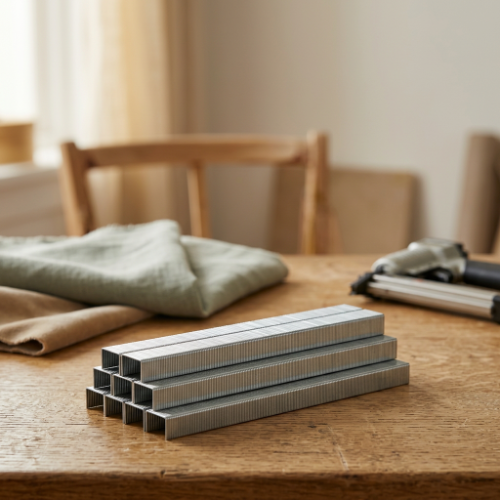
80 Series staples belong to the fine wire family, which is used in upholstery, furniture assembly, and light woodworking. On the Chaoyue product page, this series is listed as a 21 gauge product. Still, a tool described as "fine wire compatible" may not accept every product in that family.
Check the exact model number and its approved fastener specifications. If the documentation is unclear, ask the tool supplier or the staple manufacturer before you buy.
2. Compare Crown Width and Wire Dimensions
The crown is the horizontal part that connects the two legs. Its width affects how the staple sits on the surface and whether it fits the driving channel.
Wire dimensions matter for the same reason. They shape the staple's profile and need to match the tool's feeding and driving design.
| Feature | What It Means | Why It Matters |
|---|---|---|
| Staple series | A defined staple design | Gives you a starting point for compatibility |
| Crown width | Width of the connecting section | Should match the tool's specified profile |
| Wire dimensions | Thickness and width of the wire | Affect feeding, driving, and fit |
| Leg length | Length of each leg | Influences penetration depth and suitability for the material |
| Strip configuration | How staples are joined into a strip | Affects magazine loading and feeding |
| Surface finish | Treatment on the metal surface | Should suit the application and storage conditions |
Compare each of these points with the stapler manufacturer's documentation. Looking alike is not the same as being interchangeable.
3. Choose a Leg Length That Suits the Material
Leg length deserves extra attention in furniture and upholstery work.
A short leg may not grip the supporting material well. A long leg may go too deep, or come out the other side of a thin workpiece.
The right length depends on material thickness, the number of layers, the density of the base material, and how much holding strength you need. Fixing one thin fabric layer to a wooden frame is a different job from fastening a thicker upholstery build-up. Think about the whole stack, not just the top layer.
If the application is new to you, run a small sample test on the real workpiece before starting production.
Can Every 80 Series Staple Work in the Same Pneumatic Stapler?
Not necessarily. A shared series name doesn't mean every length, wire profile, or strip type will run in every tool.
Most pneumatic staplers support a defined range of sizes, and some models have design quirks that affect loading and driving. These situations come up often:
- Two staples are in the same series but have different leg lengths.
- The crown widths look alike, but the wire dimensions differ.
- The strip doesn't sit properly in the magazine.
- The tool manual lists a narrow range of approved fasteners.
- A replacement product comes from a different source and hasn't been verified.
So the question isn't whether the box says "80 Series." The question is whether that specific product matches your stapler.
What If You Want to Change Suppliers?
Switching suppliers can make sense. Just do it with a technical check instead of a name comparison.
Ask for the specification sheet and compare dimensions, material, finish, and strip configuration with the staples you use now. If the new product looks suitable, run a controlled trial on your own equipment and workpiece. Watch for feeding consistency, driving results, staple placement, and the condition of the finished surface.
Distributors can also keep a record of approved specifications for each tool model. That makes reordering easier and lowers the chance of buying something that looks right but doesn't fit.
How Do You Match Staples to Different Applications?
The application shapes both the staple choice and the way you test compatibility. The Chaoyue fine wire range is described for light-duty uses such as upholstery, felt, insulation, case backs, screening, and shoes, so these examples stay close to that scope.
Furniture and Upholstery Production
Upholstery shops use fine wire staples to attach fabric and soft materials to frames. Consider the fabric, the material underneath, where the staple goes, and how the finished piece should look.
A staple that works on one component may not suit another. Thin backing, layered fabric, and wood-framed seating can each call for a different approach. Before choosing, think through these points:
- The type and thickness of the material being fastened
- The base material and its density
- The penetration depth you need
- Whether the staple will be visible
- The staple specifications approved for your tool
A sample test shows whether the staple seats properly and whether the result meets your requirements.
Woodworking and Light Assembly
In woodworking, the link between leg length and base thickness comes first. Wood density, grain direction, and the fastening position all change how a staple enters the material. An unsuitable staple may bend, sink unevenly, or hold less firmly than expected.
The tool matters too. A compatible staple doesn't make every pneumatic stapler suitable for every woodworking task. Read the fastener requirements and the tool's intended uses together.
Cabinet and Furniture Component Assembly
Some furniture parts use staples to attach backing panels or lightweight components. The method needs to fit the construction of the part.
Check whether the material can take the staple without splitting, over-penetration, or surface marks, and confirm that the staple dimensions match the tool. If the finished part has appearance or structural requirements, test the method on a few pieces before running a full batch.
Why Do Pneumatic Staplers Jam or Drive Staples Poorly?
When a stapler jams, bends staples, or gives uneven results, the staple is only one possible cause. Knowing the other causes helps you avoid replacing staples that were fine.
| Observed Problem | Possible Cause | What to Check |
|---|---|---|
| Staples don't feed smoothly | Strip configuration mismatch or loading error | Confirm the series and review the magazine loading steps |
| Staples bend when driven | Fastener mismatch, unsuitable base material, or tool wear | Check dimensions, workpiece material, and tool condition |
| Driving depth varies | Changes in material or operating conditions | Review the workpiece and the tool maker's guidance |
| Staples sit unevenly | Positioning or inconsistent support | Check placement and stapler alignment |
| Repeated feed interruptions | Fit issues, damaged strips, or magazine problems | Inspect the staples and the magazine as described in the manual |
Follow the tool manufacturer's safety instructions before making adjustments. Disconnect the air supply before clearing a jam or doing maintenance when the manual requires it. If problems continue after you've checked the staples and the loading steps, have the stapler inspected or serviced.
What Should Buyers Ask an 80 Staples Manufacturer?
For importers, wholesalers, and furniture makers, buying involves more than confirming a name. Clear communication with the supplier prevents specification errors and keeps repeat orders simple. Before asking for a quotation, gather the details below.
Product and Equipment Details
Share the staple series and the stapler model. If you can, send the current product label or spec sheet. Ask the supplier to confirm the key dimensions and whether the proposed product matches the tool's stated requirements. If your material or process is unusual, say so.
Material and Finish Requirements
Describe the application and any conditions that matter, such as storage in a humid area. Fastening upholstery fabric to a wooden frame, for example, has different needs from using components stored in damp conditions. The supplier can then point out which materials and finishes are worth considering, based on the actual product and your conditions.
Packaging and Repeat Orders
Distributors and high-volume users should ask how the staples are packed, how products are labeled, and whether the packaging details support stock management. For repeat orders, keep the approved specification and, where practical, a reference sample. It makes later deliveries easier to compare with the original selection, and it helps both sides trace the cause if a production issue appears.
How Can a Staple Manufacturer Help You Confirm Compatibility?
A manufacturer can provide accurate product information and help you compare your requirements with the available specifications. Useful support includes product identification, dimension confirmation, material and finish details, packaging information, and samples where available.
Give the supplier your tool model and application details instead of asking for a general 80 Series product. With more information, the supplier can respond more precisely, and misunderstandings during quotation and order confirmation become less likely.
For bulk buyers, a specification review also helps with inventory planning. Rather than relying on a broad series name, you can keep product records tied to each tool and application.
Chaoyue lists its 80 Series Fine Wire Staples among other fine wire series, including 10F, R13, 14, 71, 72, and 84. Buyers can use that page as a starting point, then confirm the tool model and fastening conditions before finalizing an order.
Are You Ordering the Right 80 Staples?
Run through these questions before you place an order:
- Does the staple series match the tool manufacturer's requirements?
- Have you compared crown width and wire dimensions?
- Is the leg length suitable for the material being fastened?
- Does the strip configuration fit the stapler's magazine?
- Do the material and finish suit the working and storage conditions?
- Have you tested a sample if compatibility is uncertain?
- Have you recorded the approved specification for future orders?
Once these points are confirmed, choosing the right staples becomes a clear, repeatable process. The right choice depends on how the fastener, the tool, and the workpiece work together. The series name is only part of that.
For furniture manufacturers, upholstery workshops, and fastener distributors, a short verification step before purchasing can reduce feeding problems, make fastening results more consistent, and support steadier stock planning.

 Quick Links

