


 English
 русский
 中文简体
中文简体 عربى
عربى
Staple Wire Band plays a central role in the production of brad nails and related fastening products. While end users often focus on the nail itself, the quality of the wire band directly affects dimensional accuracy, surface finish, and structural strength.
In woodworking, cabinetry, and trim applications, brad nails must combine discreet appearance with stable holding performance. Achieving that balance starts at the raw material stage. The structure, coating, and processing of the wire band define how the final fastener behaves during driving and long-term use.
What is a Staple Wire Band in Fastener Manufacturing?
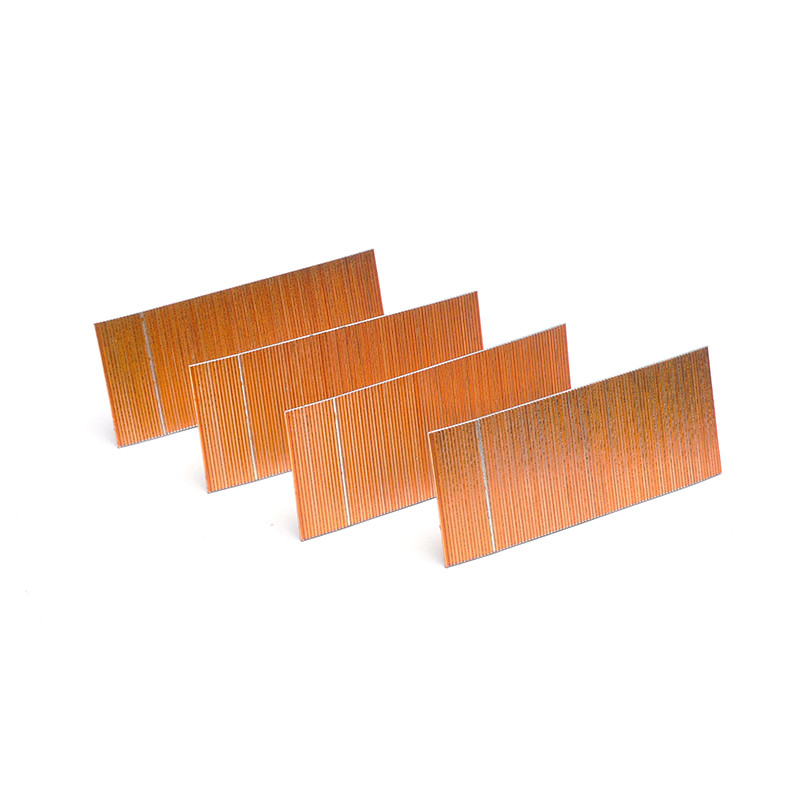
Staple Wire Band refers to the coiled or banded steel wire used as the base material for producing brad nails, F nails, T nails, and headless pins. It is typically processed through drawing, straightening, cutting, and forming stages before becoming finished nails.
The mechanical properties of the wire—such as tensile strength and ductility—determine whether the nail can penetrate softwood, plywood, or MDF without bending. Dimensional consistency ensures compatibility with brad nailers and automated assembly equipment.
A stable wire band supports smooth production flow and reduces breakage during forming.
Material Options and Surface Treatment
Carbon Steel Wire
Carbon steel is commonly used for indoor fastener applications. It provides reliable strength for woodworking tasks and is suitable for brad nails used in furniture and interior trim.
Stainless Steel Wire
For humid or outdoor environments, stainless steel options offer corrosion resistance. This is particularly relevant for cabinetry in kitchens or installations exposed to moisture.
Galvanized Coating
Galvanized wire bands feature a zinc layer to reduce rust formation. Coating uniformity is critical because uneven thickness can affect forming precision and surface appearance.
Selecting the right material depends on the final application of the nail rather than production convenience.
Gauge Accuracy and Dimensional Control
Gauge tolerance is one of the key quality indicators in wire band production. Even minor deviations affect nail compatibility with automated nailers and packaging systems.
A professional Staple Wire Band Manufacturer typically implements:
- Precision wire drawing equipment
- Online diameter monitoring
- Surface defect inspection
- Controlled heat treatment
These processes support stable mechanical properties and reduce internal stress within the wire. Balanced hardness allows nails to penetrate material without cracking.
Production Workflow from Wire to Nail
The transformation from wire band to finished brad nail involves several coordinated stages:
- Wire Drawing – Reducing the diameter to the required gauge.
- Straightening and Cutting – Preparing uniform nail blanks.
- Head Forming – Creating flat heads, T-heads, or headless profiles.
- Surface Treatment – Applying coatings where needed.
- Collation – Arranging nails for compatibility with nailers.
Every step depends on the stability of the original Staple Wire Band. Irregular wire tension or surface flaws can interrupt forming processes and reduce production efficiency.
Quality Control and Long-Term Performance
Wire band quality influences not only manufacturing efficiency but also the durability of finished nails. Properly processed steel maintains structural integrity under driving force and daily use conditions.
Corrosion-resistant options extend the application range in humid environments. Consistent mechanical properties support reliable fastening in delicate wood materials without visible surface damage.
Building Stable Fasteners Starts with Stable Wire
Staple Wire Band functions as the foundation of brad nail production. Its material composition, dimensional accuracy, and surface treatment shape the characteristics of the final fastener.
Working with an experienced Staple Wire Band Manufacturer supports consistent output, smooth processing, and dependable nail performance in woodworking and trim applications. Careful attention to raw material quality strengthens every stage of fastener manufacturing, from wire drawing to finished installation.

 Quick Links
