


 English
 русский
 中文简体
中文简体 عربى
عربى
Anyone who has picked up a box of concrete nails at a hardware counter has probably assumed all concrete is basically the same. It looks gray, feels hard, and seems like it should behave the same way no matter where you are working.
In reality, concrete varies quite a bit depending on how it was mixed, poured, and aged, and that variation matters more than most people expect once a nail actually meets the surface. Below is a closer look at what determines whether a concrete nail holds well, struggles a little, or calls for a different approach altogether.
Concrete Is Not a Single Material
Concrete is a mix of cement, aggregate, water, and sometimes additives, and the ratio of these ingredients changes how hard and dense the final surface becomes. Two slabs that look identical on the surface can behave quite differently once you try to drive something into them.
Why Mix Design Changes Everything
A concrete mix with finer aggregate and a higher cement ratio tends to cure into a denser surface over time. A mix with coarser aggregate or a leaner cement content often stays a bit more workable, at least from a fastening standpoint. Neither version is right or wrong, they are simply made for different structural purposes, and that purpose has a direct effect on how a nail interacts with the material.
The Role of Age and Curing
Fresh concrete, even after it feels solid to the touch, keeps hardening for weeks or sometimes months after it is poured. A slab finished last week is not really comparable to one that has been curing for a year. Older concrete is generally denser and less forgiving when it comes to nailing, while younger concrete may still allow a bit more give. This is one reason contractors often ask about the age of a slab before deciding on fasteners in the first place.
Moisture Content Also Plays a Part
Concrete that has recently been exposed to rain, or that sits in a naturally damp environment, can behave a little differently from bone-dry concrete. Slightly damp surfaces sometimes accept a nail with less resistance, while very dry, aged concrete tends to feel harder and more brittle under a hammer strike.
Common Concrete Surfaces on Job Sites
Not every concrete surface behaves the same way, so it helps to know roughly what you are dealing with before reaching for a box of nails.
| Surface Type | General Density | Typical Nailing Behavior |
| Poured Concrete Slab, Standard | Medium to High | Usually accepts nails with steady hammer force |
| Concrete Block or CMU | Medium | Often easier to nail, especially near mortar joints |
| Precast Concrete Panel | Medium to High | Can vary by panel, sometimes needs more force |
| Lightweight Concrete | Lower | Tends to accept nails with less resistance |
| High Density Industrial Concrete | High | May resist standard nails and need alternative fasteners |
This table works as a general reference rather than a strict rule, since local mix design, curing time, and moisture content all play a part in the final result.
What Actually Happens When a Nail Meets Concrete
Understanding a bit about how a nail is built helps explain why some nails behave differently across surfaces.
Shank Shape and Holding Power
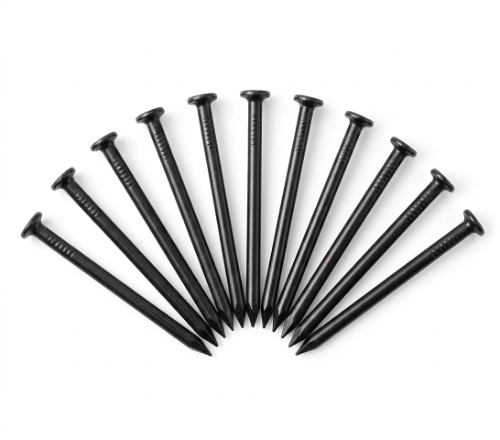
Many concrete nails use a fluted or grooved shank instead of a smooth one. The grooves help the nail grip the surrounding material as it is driven in, and this matters more in denser concrete, where friction plays a bigger role in keeping the nail in place once it is set.
Coating and Its Practical Purpose
Coatings on steel nails, such as zinc plating, are mainly there to slow down corrosion, especially in outdoor or humid environments. A coating does not change how hard a surface a nail can penetrate, but it does affect how well the nail holds up over time once it is installed.
Matching Length and Diameter to the Task
A longer or thicker nail is not automatically the right pick for every job. Thin overlays or veneer applications often call for shorter nails, while thicker slabs may need more length to get a secure hold. Matching nail size to the actual thickness and hardness of the surface tends to matter more than simply reaching for a bigger nail out of habit.
Situations Where Concrete Nails May Struggle
There are cases where a standard concrete nail is not the most practical choice, and it helps to recognize them ahead of time rather than after a handful of bent nails.
- Very old, fully cured slabs that have hardened well beyond typical residential concrete
- High density industrial or structural concrete used in heavy load applications
- Concrete with rebar or wire mesh sitting close to the surface, since striking metal reinforcement can bend or snap a nail
- Thin concrete overlays where a nail could crack through rather than hold steadily
In these situations, switching to a masonry screw, a powder-actuated fastener, or a drilled anchor is often a steadier path than continuing to force a standard nail.
Simple Ways to Improve Results on Site
A few practical habits can make a noticeable difference in how well concrete nails perform, no matter which surface you are working with.
- Test a small, inconspicuous area first if you are unsure about the concrete's hardness.
- Use a hammer with enough weight for the job, since underpowered strikes tend to bend nails rather than driving them in cleanly.
- Consider a hammer drill or a powered fastening tool for denser surfaces instead of forcing a hand-driven nail past its limit.
- Keep nails a reasonable distance from slab edges and corners, where concrete is more prone to chipping under impact.
- Store nails in a dry area before use, since surface rust can make driving slightly harder and less predictable.
Indoor Versus Outdoor Considerations
Where the nail ends up matters almost as much as what it is going into. Indoor applications, such as furring strips or interior trim, generally deal with more stable temperature and moisture conditions, so coating plays a smaller role.
Outdoor applications, including exterior sheathing or ground-level installations, expose nails to rain, temperature swings, and sometimes salt air near coastal regions. In those cases, coating quality and storage before installation become part of the overall performance picture, alongside the concrete itself.
Concrete Nails Compared to Other Fastening Methods
Concrete nails are one option among several for attaching materials to concrete, and each method comes with its own trade-offs.
| Fastening Method | Typical Use Case | Ease of Installation | Removability |
| Concrete Nails | Light to medium fastening, furring strips, trim | Straightforward with a hammer | Difficult once fully set |
| Masonry Screws | Fixtures that may need occasional removal | Requires pre-drilling | Easier to remove than nails |
| Concrete Anchors | Heavier loads, structural attachments | More setup, often needs drilling and hardware | Depends on anchor type |
| Powder-Actuated Fasteners | Dense or industrial concrete | Fast with the right tool | Difficult to remove |
Each method fits a different combination of surface hardness, load requirements, and whether the attachment might need to come apart again later.
Choosing the Right Concrete Nail for Your Project
A few practical questions can help narrow down the right nail for a specific job before you head to the checkout counter.
- What is the concrete surface, and roughly how old or dense does it seem?
- Is the fastening for a lighter material like furring strips, or something with more weight behind it?
- Will the installation happen indoors, outdoors, or in a humid environment where coating matters more?
- Do you have access to a hammer drill or a powered tool, or will this job be done entirely by hand?
Answering these questions before purchasing a box of concrete nails tends to save time on site and reduces the odds of bent nails or a fastening job that does not hold as expected. Concrete surfaces are not one size fits all, and neither is the nail that goes into them. Taking a few minutes to match the fastener to the job usually pays off far more than grabbing whatever box happens to be closest on the shelf.

 Quick Links
