


 English
 русский
 中文简体
中文简体 عربى
عربى
Fine Wire Staples continue to gain attention across multiple industries, especially as manufacturers and end-users focus on materials that support clean finishes, controlled fastening, and consistent assembly. As a fastener category known for its relatively thin wire diameter and narrow crown structure, Fine Wire Staples are widely applied in projects involving delicate materials, visible surfaces, or areas where reduced surface disruption is preferred.
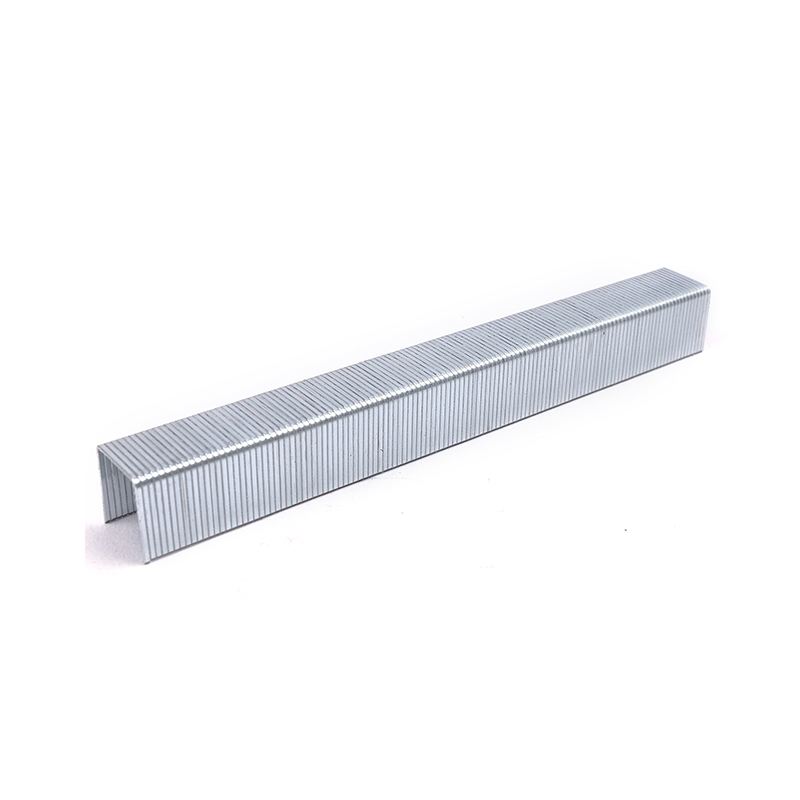
Recent industry data shows that demand for light-duty fastening products has remained stable in furniture production and interior finishing. In upholstery work, for example, the fastener size often influences surface flatness and fabric tension. This explains why Fine Wire Staples have become a standard option for sofa assembly, seat shaping, backrest lining, and decorative textile fastening.
In light woodworking, Fine Wire Staples are frequently used for frame mounting, picture frame assembling, drawer lining, and hand-craft-based furniture details. A recent survey in the woodworking sector shows that small-gauge staples are increasingly used for components under 10 mm thickness because they allow consistent penetration without causing splitting. Compared with mid-wire staples, Fine Wire Staples generate fewer visible marks on trims and moldings, which is valued in interior renovation where appearance is a deciding factor. Whether for wall trim, door edging, or light decorative panel mounting, installers often rely on staples with thinner wire to minimize surface changes during fastening.
Automotive interior assembly is another area showing stable usage. Fabric panels, soft linings, sound-absorbing sections, and leather components often require a fastening option that will not deform the material. Fine Wire Staples answer this requirement by providing a fastening point with a smaller entry mark. In recent automotive interior tests, thin-gauge staples demonstrated better performance when used on curved or cushioned surfaces compared with heavier staples, which can leave more noticeable marks.
Material choice also plays a role in overall performance. Fine Wire Staples are typically offered in galvanized and stainless-steel finishes. Galvanized staples are commonly selected for indoor environments and general upholstery because they deliver stable fastening while maintaining balanced cost control. Stainless-steel staples are preferred in environments where humidity, temperature changes, or repeated contact may affect standard coatings. For example, stainless-steel Fine Wire Staples are often applied in automotive interiors, marine-influenced areas, and outdoor furniture frames because they maintain corrosion resistance and long-term appearance.
Data from multiple furniture workshops shows that stainless-steel staples are used more frequently when products are exposed to moisture or when customers request higher durability. Meanwhile, galvanized staples remain widely used across interior decoration and light furniture because they offer stable performance in controlled environments. This clear differentiation between indoor and high-humidity applications helps buyers select the suitable material according to project needs.
From a procurement standpoint, many purchasing managers evaluate Fine Wire Staples based on three main criteria: gauge consistency, crown width stability, and leg length accuracy. Even a small deviation in these parameters may influence assembly efficiency or appearance quality. For this reason, Fine Wire Staples are often compared across different suppliers to assess packaging uniformity, compatibility with standard staplers, and penetration testing results.
As more businesses adopt lightweight materials and decorative finishes, Fine Wire Staples are expected to remain relevant in categories such as home renovation, custom furniture, automotive interiors, and small-scale repair work. The broad range of crown widths and leg lengths allows buyers to match different substrates—from fabric and leather to softwood strips and thin composite boards.

 Quick Links
