


 English
 русский
 中文简体
 عربى

80 Staples are fine wire staples that some furniture makers use to fix light wooden parts, such as thin backing sheets and drawer bottoms. Whether they suit a given job depends on the furniture structure, the panel material, the connection requirements, and the pneumatic stapler on the line. They are not a universal answer for every joint in a cabinet.
Where Can 80 Staples Be Used in Cabinet and Drawer Assembly?
Cabinet and drawer construction involves many different joints. Some carry weight, and some simply hold a thin panel in place. Fine wire staples tend to appear in the second group, so it helps to look at real components one by one.
Attaching Cabinet Backing Materials
Many cabinets have a thin rear panel that keeps the carcass square and closes off the back. In some designs, this panel is fixed with staples driven into the rear edges of the side panels, the top, and the bottom.
Whether that works depends on several things:
- The material of the backing sheet and how thick it is
- The construction of the cabinet frame behind it
- Whether the backing is meant to add rigidity or only to close the opening
- The load the cabinet will carry once it is in use
A fine wire staple is not a default choice for every cabinet back. If the design relies on the back panel for structural stability, the designer may call for a different fastening method, or a combination of methods.
Securing Drawer Bottom Panels
A drawer bottom is another common spot. In some drawers, the bottom panel sits against the underside of the drawer sides and is held with staples. In others, it slides into a groove and needs no staples at all.
The right method follows the drawer design. Panel material, frame construction, and the expected contents all matter. A drawer meant for light items has different needs from one that will hold heavy tools or kitchen equipment. For drawers with a heavier duty or a special joint design, the specification should come from the furniture designer, not from the staple catalog.
Supporting Lightweight Furniture Assembly
Beyond backs and drawer bottoms, fine wire staples may hold small internal parts. Examples include thin auxiliary panels, light dividers, and other hidden components that do not carry significant stress.
The phrase to remember is "depends on the structure." A staple that suits one hidden panel may be wrong for the panel next to it. Each part deserves its own check.
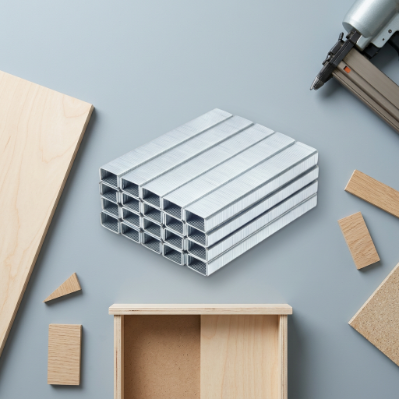
Why Do Some Furniture Manufacturers Choose Fine Wire Staples?
Manufacturers do not pick a fastener by habit alone. They look at what the joint needs and what the production line can handle. Fine wire staples fit certain tasks for practical reasons, which are explained below.
A Narrow Crown for Certain Assembly Tasks
The crown is the flat bridge joining the two legs. A narrow crown covers a smaller area of the panel surface, which can suit thin sheets and edges where space is limited.
That said, a narrow crown also means less surface contact. Whether it is acceptable depends on the material and on how much holding force the joint needs. The product specification sheet is the proper place to compare crown details, not the product name.
Compatibility With Pneumatic Staplers
Most workshops that assemble cabinets in volume use pneumatic staplers, because compressed air drives fasteners quickly and consistently. These tools are built around a defined range of staples, so the series, crown, wire size, and strip format all affect whether a staple feeds and drives properly.
Two staples can look alike in the box and still behave differently in the magazine. The tool manual lists what the manufacturer approves, and that list is the reference to follow.
Practical Considerations for Repetitive Fastening
Cabinet production repeats the same action many times a day. Small variations add up over a shift. A mismatched staple, a worn driver, or uneven air pressure can show up as bent staples or uneven depth.
Consistency comes from three habits working together: choosing the correct staple, keeping the tool in sound condition, and handling workpieces in the same way each time.
How Do You Choose 80 Staples for Different Cabinet Materials?
Material choice is where selection gets practical. A staple that sits neatly in one board may split another. This section covers the points that deserve attention before a specification is fixed.
Consider the Type of Panel or Wood
Cabinet makers work with several materials, and each one reacts differently to a driven staple.
| Material | General Behavior | Point to Watch |
|---|---|---|
| Solid wood | Grain direction affects how a staple enters | Edge splitting near the end grain |
| Plywood | Layered structure with varying density | Consistent holding across layers |
| Particleboard | Softer core, less grip near edges | Edge crumbling and reduced hold |
| Fiberboard | Uniform surface, dense in some grades | Penetration depth and surface marks |
Boards of the same type can vary between suppliers, so a panel name alone cannot settle the staple choice. A short trial on the actual board is the safer route.
Check Staple Leg Length and Crown Width
Three details shape how a staple performs in the panel and in the tool:
- Leg length: Linked to material thickness, penetration depth, and the joint design. A short leg may hold poorly, while a long one may break through the far side.
- Crown width: Affects how the staple fits the tool and how the crown rests on the workpiece.
- Wire dimensions: Must fall within the range stated by the stapler manufacturer.
Read these details together. A staple with a suitable leg length can still be wrong for the tool if the wire or crown falls outside its approved range.
Match the Staples to the Tool and Fastening Task
A product labeled 80 Series Staples is not automatically interchangeable with another product carrying the same label. Different makers may produce slightly different dimensions or strip formats.
A sensible routine looks like this:
- Check the stapler model and its approved fastener range.
- Read the supplier's specification sheet.
- Compare it against the staples you already use.
- Run a sample test on the real panels before starting a full batch.
What Problems Can Occur When the Wrong Staples Are Used?
Fastening problems cost time on a production line. Knowing the usual symptoms makes it easier to trace the cause instead of guessing.
| Common Problem | Possible Cause | What to Check |
|---|---|---|
| Staples bend during installation | Fastener mismatch, unsuitable material, or tool condition | Staple dimensions, workpiece material, and tool condition |
| Staples do not feed smoothly | Incorrect staple strip or loading issue | Series compatibility and magazine loading |
| Fasteners penetrate too deeply | Unsuitable leg length or operating conditions | Material thickness and tool settings |
| Panels show surface damage | Incorrect fastening position or unsuitable fastening method | Panel structure and installation requirements |
| Fastening results vary | Changes in material, tool condition, or operating technique | Workpiece consistency and equipment condition |
These are possible causes, and not every fault comes from the staple itself. When a problem appears, review the equipment manual, the material characteristics, and the real production conditions together. Disconnect the air supply before clearing a jam or doing maintenance, as the tool manual directs.
How Can Manufacturers Improve Consistency in Cabinet Assembly?
Consistent results come from the process as a whole, and the fastener is one part of it. The habits below connect staple selection to the way cabinets are actually built.
- Confirm specifications before production: Check the staple model, the tool match, and the workpiece requirements before the run begins.
- Test the fastening method: Fire a few staples into sample panels and look at depth, position, and surface condition.
- Maintain consistent material handling: Keep panel positioning and material condition as uniform as practical, since small shifts change the result.
- Inspect fastening results: Check staple position, holding effect, and surface appearance against the furniture design and quality standards.
- Keep product records: Store the approved staple specification so that reorders and later production runs follow the same reference.
None of these steps requires complex equipment. They are simple checks, and they tie the choice of fastener directly to how a cabinet or drawer comes together on the shop floor.
What Should Buyers Check Before Ordering 80 Staples in Bulk?
Furniture manufacturers, importers, wholesalers, and hardware distributors face a similar question when ordering in volume: will this product work in our customers' tools and applications? A few checks before purchase help answer it.
Confirm Product Specifications
Ask the supplier to confirm the series, crown width, wire dimensions, leg length, and strip format. Written specifications are easier to compare than verbal descriptions and are useful later if a question comes up.
Check Compatibility With Existing Equipment
Match the product against the model of your pneumatic stapler and the range its manufacturer approves. If you plan to change suppliers, compare specifications line by line instead of relying on the series name. A small trial batch on your own equipment can confirm the match before a large order goes through.
Review Packaging and Supply Requirements
Look at how the cartons are labeled, how order specifications are written, and whether samples are available. For repeat purchases, keep a record of the confirmed product details so later orders stay consistent.
If minimum order quantity, delivery time, or customization matters to your plan, ask the supplier to state the actual terms. Rely on what the supplier confirms in writing, and treat unconfirmed promises with caution.
Are 80 Staples Suitable for Every Cabinet and Drawer Design?
No. The suitability of 80 Staples depends on the furniture structure, the materials, the fastening requirements, and stapler compatibility.
- Some light panels and auxiliary parts may suit fine wire staples.
- Load-bearing parts, special structures, or joints that need greater connection strength may call for other fastening methods.
- Final selection should follow the furniture design requirements and the tool manufacturer's advice.
- When in doubt, check the specification and run a suitable test before production.
This honest limit is useful to know. It keeps expectations realistic and helps avoid rework later.
How Do You Select 80 Staples for Furniture Assembly?
Three factors guide the decision.
- Application: Decide whether the staples are for a cabinet back, a drawer bottom, or another furniture part.
- Compatibility: Confirm that the staple specification matches your pneumatic stapler.
- Material requirements: Choose according to panel characteristics, connection needs, and the installation result you observe in testing.
Buyers who want to review product details can visit the 80 Series Fine Wire Staples page from Chaoyue. Compare the listed information with your tool model and your application, and confirm the specification before finalizing an order.

 Quick Links

