


 English
 русский
 中文简体
中文简体 عربى
عربى
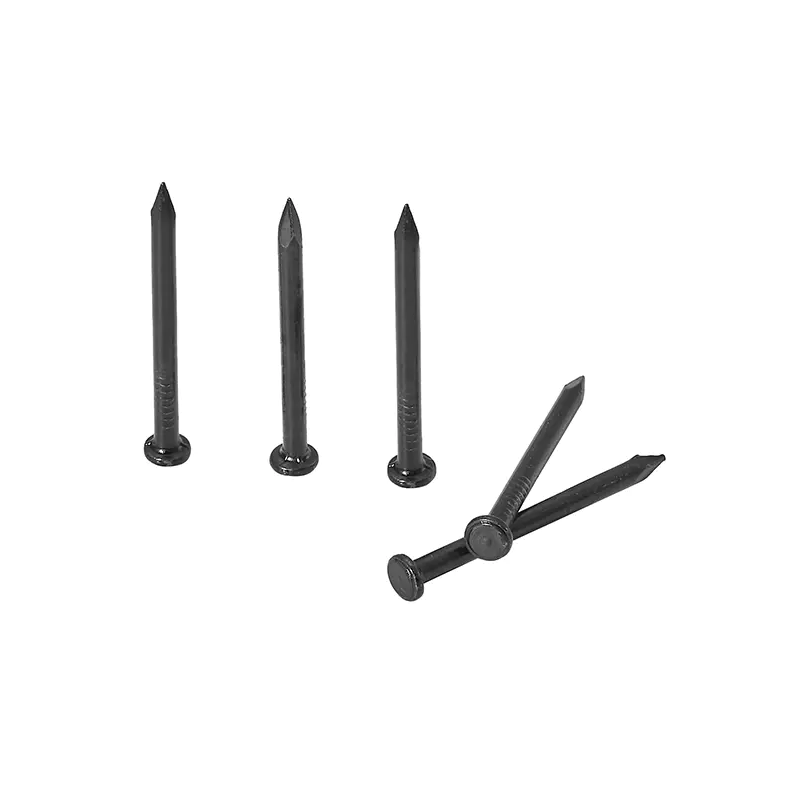
On a construction site, people tend to focus on what they can see. Wall finishes, panels, exterior lines. Fasteners rarely get mentioned in meetings. Still, they sit there, doing quiet work day after day. concrete insulation nails are one of those parts. Small in size, but they decide whether insulation stays where it should.
Once insulation starts shifting, problems don't show up immediately. It might look fine at first. Then small gaps appear. Surfaces lose alignment. Repairs follow. In many cases, the issue traces back to the initial selection of fastening components.
Choosing insulation nails is not complicated, but it is often rushed. That is where mistakes begin.
What Makes Concrete Insulation Nails Essential In Wall Systems?
At a basic level, these nails connect insulation to the base wall. That sounds simple. In practice, the connection has to deal with constant pressure.
Insulation boards are not heavy, but they are not static either. Wind pushes them. Temperature changes cause slight movement. Over time, even minor shifts can affect alignment.
The nail holds everything in place. Not just at the moment of installation, but over months and years.
Without that steady hold, the insulation layer becomes unreliable. Once that happens, other issues follow. Surface quality drops. Energy performance changes. Maintenance becomes more frequent.
So the nail is not just a fixing tool. It is part of the system.
How Does The Nature Of A Project Shape The Choice?
Different projects feel similar at glance. Concrete wall, insulation layer, fastening step. But once work begins, differences become obvious.
A small residential job usually moves at a steady pace. Walls are easier to access. Surfaces are more predictable. In that setting, installers often prefer something simple and easy to handle.
Now think about a larger building. Wide exterior walls. Changing weather during installation. More people involved. Under these conditions, consistency becomes more important than convenience.
Renovation work adds another layer. You are not working with a fresh surface. Some areas may feel solid, others less so. There is always a bit of uncertainty.
That is why one type of nail does not fit every project. The context matters more than people expect.
Which Material Choices Fit Different Environments?
Material selection is where many decisions start. It also happens to be where assumptions can go wrong.
Plastic nails are often chosen because they are light and easy to use. They work well in stable conditions. Slight movement does not affect them much.
Metal options feel stronger, and in some cases they are. They provide a firm hold, especially on larger surfaces. But they react differently to environmental exposure, which needs to be considered.
Some projects use mixed material designs. These try to balance flexibility and strength. They are useful when conditions are not clearly one type or another.
Here is a simple way to look at it:
| Material Type | How It Behaves | Where It Fits |
|---|---|---|
| Plastic | Slightly flexible, easy to handle | Controlled or mild conditions |
| Metal | Firm, less flexible | Larger surfaces or stronger hold needs |
| Composite | Mixed response | Situations with changing conditions |
No option works everywhere. The key is matching the material to the environment, not the other way around.
How Does The Base Wall Influence Performance?
Not all concrete feels the same when you start working on it. Some walls are dense and hard. Others have small variations that are not visible until installation begins.
If the surface is very dense, the nail needs to anchor without creating stress points. Otherwise, small cracks can form.
If the surface is less uniform, the issue changes. Now the challenge is maintaining even pressure. A rigid solution may not adapt well in this case.
Wall thickness also enters the picture. The nail must go deep enough to hold, but not in a way that affects the structure behind it.
Skipping this evaluation is common. It is also one of the main reasons fastening problems appear later.
How Do Different Insulation Materials Affect The Decision?
Insulation is not a single category. Some boards are firm. Others compress easily. This changes how force is distributed during installation.
With rigid materials, pressure needs to be controlled. Too much concentration in one point may damage the surface.
With softer materials, the issue is different. The force needs to spread out. Otherwise, the nail may sink too deep or fail to hold properly.
Layered systems complicate things further. The nail has to pass through multiple layers while keeping everything aligned.
In practice, installers often adjust based on experience. Still, matching the nail design to the insulation type makes the process smoother.
How Do Weather And Surroundings Affect Long-Term Use?
Conditions on site are not static. Even during installation, temperature can shift. After completion, the structure continues to respond to its surroundings.
Heat and cold cause expansion and contraction. This is gradual, but constant. A fastening solution needs to tolerate that movement.
Moisture introduces another variable. Some materials handle it well. Others change over time.
Wind is less obvious but just as important. On open surfaces, repeated pressure can slowly weaken weak attachment points.
These factors do not always cause immediate failure. Instead, they reduce stability little by little.
That is why environment should be part of the decision, not an afterthought.
What Should Be Considered During Installation?
Installation style often gets less attention during planning. On site, it becomes very real.
If the work is manual, handling matters. Installers tend to prefer components that are easy to position and fix.
If tools or systems are used, consistency becomes more important. Irregular shapes or slight variations can slow the process.
There is also the human factor. Not every worker has the same experience level. Simpler solutions reduce mistakes.
In many cases, the choice of nail affects how smoothly the installation moves forward.
What Common Oversights Can Affect Results?
Most problems do not come from complex failures. They come from small decisions made too quickly.
Choosing based only on cost is one example. It seems reasonable at the time. Later, adjustments may be needed.
Ignoring compatibility is another. A mismatch between nail, wall, and insulation does not always show immediately.
Environmental conditions are sometimes underestimated. A solution that works in one place may behave differently elsewhere.
These are not dramatic mistakes. They are easy to make, which is why they happen often.
How Can The Selection Process Become More Practical?
A simple approach works better than an overly detailed one.
Start with the type of project. That already removes some options. Then look at the wall condition. After that, consider the insulation material.
Once those are clear, environmental factors and installation method usually fall into place.
This step-by-step thinking makes the process easier to manage. It also helps teams stay aligned, especially on larger projects.
There is no single correct answer. The goal is to make a choice that fits the situation well enough to perform reliably.
How Are Changing Construction Approaches Influencing Choices?
Construction methods do not stay the same for long. New systems appear. Old methods get adjusted.
Prefabricated elements are becoming more common. These require consistent fastening behavior. Variations can cause delays.
At the same time, on-site work still deals with unpredictable conditions. Flexibility remains important.
There is also more attention on long-term use. Fewer adjustments after installation is a common goal.
All of this affects how small components are selected. Even something as simple as an insulation nail reflects these broader changes.

 Quick Links
