


 English
 русский
 中文简体
中文简体 عربى
عربى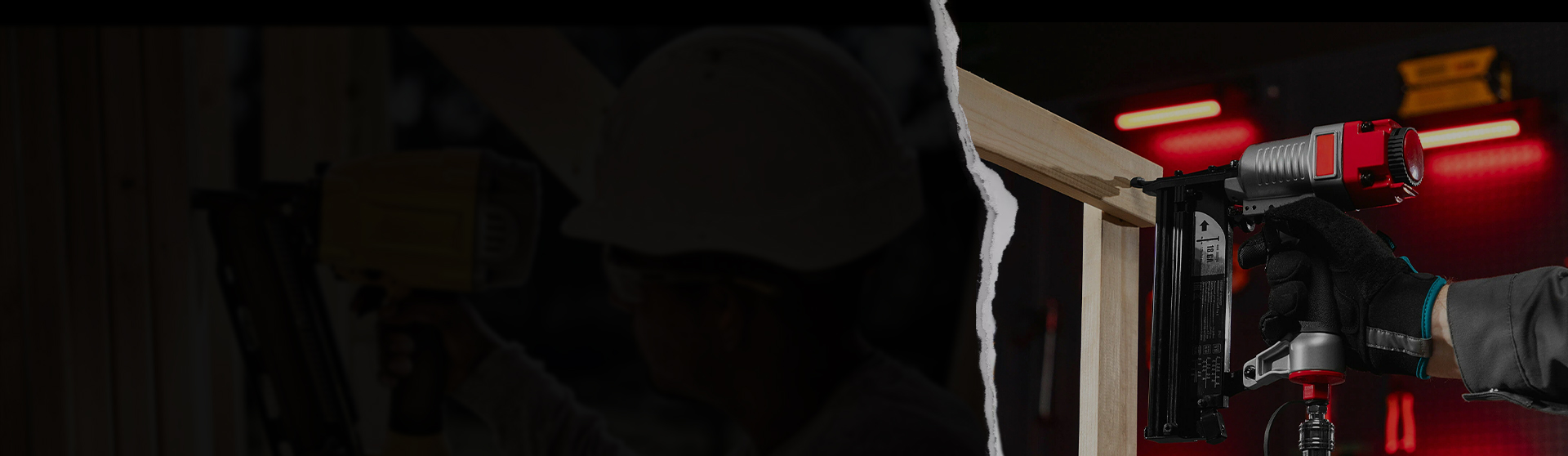
Staple wire heavy duty is used in many work environments where simple fastening is not enough. It appears in packaging workshops, furniture assembly areas, woodworking lines, and general maintenance tasks. At glance, it looks like a small consumable item. In practice, it influences how stable a structure feels, how clean a surface looks, and how smoothly a production task moves forward.
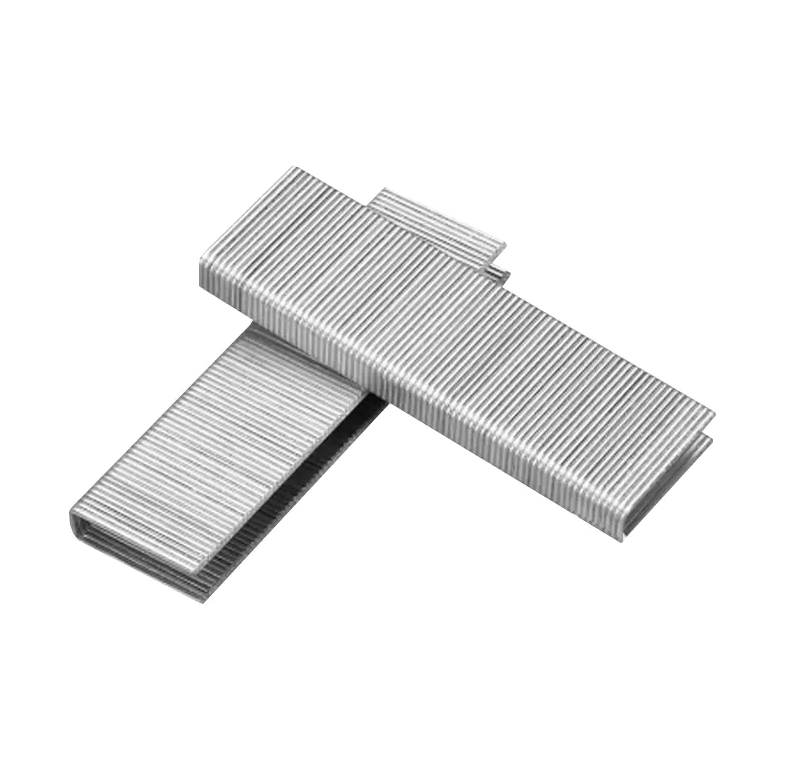
Choosing the right size is not something that stays fixed. It changes with material, pressure, and even working habits. A small difference in selection can shift the result from stable fastening to repeated fixing.
What Does Staple Wire Size Actually Represent in Daily Use?
Staple wire size is usually understood through its physical shape. It is not only about "big" or "small." It is about how the staple interacts with material layers.
There are three parts that matter in real use:
- The leg length, which decides how deep the staple enters
- The crown width, which decides how much surface is covered
- The wire thickness, which affects firmness during fastening
In daily work, these three elements are not considered separately. They work together as one behavior.
When people talk about "wrong size," they usually mean the staple does not sit naturally in the material. It either feels too shallow, or it pushes too hard into the surface.
Why Does Size Selection Affect Real Work More Than Expected?
In production settings, fastening is not a final step. It is part of movement. Materials are handled, stacked, and transported. That means every fastening point is under long-term pressure.
When size is not suitable, problems may not appear immediately. They often show up later in a quiet way.
Some common situations include:
- edges slowly loosening after stacking
- surfaces showing small cracks after handling
- staples bending during insertion
- uneven appearance across similar products
These issues are often traced back to size mismatch rather than equipment failure.
In packaging work, a weak fastening may to repeated sealing. In furniture work, joints may feel less stable after assembly. In woodworking, surface damage may require rework.
The effect is not dramatic at first, but it builds up through repetition.
How Do Different Materials Change the Choice of Staple Size?
Material behavior is one of the important factors. Each surface reacts differently when pressure is applied.
Soft fiber materials compress easily. Staples enter smoothly, but they may also sink too deep if the size is not controlled.
Dense wood behaves in the opposite way. It resists penetration, so the staple needs more reach and strength.
Carton and paper-based materials sit in between. They are flexible but easy to tear if the size is too aggressive.
Multi-layer boards create another challenge. Different layers respond differently, so the staple may feel stable in one part and loose in another.
A simple comparison helps:
| Material type | What happens during fastening | What the size needs to do |
|---|---|---|
| Soft fiber board | Compresses under pressure | Balanced depth, not too strong |
| Solid wood | Resists entry | Deeper reach needed |
| Carton packaging | Easy to deform | Gentle, controlled fastening |
| Layered boards | Uneven reaction | Flexible adjustment range |
In real use, people often test by feel rather than numbers. The material gives feedback immediately.
How Do Staple Structure and Shape Influence the Result?
Staple wire is not just a straight piece of metal. Its shape changes how force spreads.
The crown section spreads pressure across the surface. A wider crown reduces stress on one point. A narrower crown concentrates force, which may help with penetration but can leave marks.
The leg section controls how deep the staple goes. Short legs stay near the surface. Long legs go deeper and hold more firmly.
Wire thickness adds another layer. Thicker wire feels stronger but requires more force. Thinner wire moves easily but may not hold heavy loads well.
In practice, these features are not chosen separately. They come as a combined structure. The final effect depends on how all of them interact with the material.
Where Is Heavy Duty Staple Wire Commonly Used in Real Work?
Heavy duty staple wire is used in many places where materials need to stay fixed during movement or storage.
Typical use environments include:
- carton sealing in packaging lines
- wooden frame assembly in furniture work
- panel joining in woodworking tasks
- transport preparation for stacked goods
- workshop reinforcement and repair
Each of these areas has different working pressure.
Packaging focuses on speed and repetition. Furniture work focuses on structure stability. Transport preparation focuses on resistance during movement.
Because of these differences, size selection is rarely the same across all tasks.
What Problems Appear When the Size Is Not Right?
Incorrect size does not always cause immediate failure. Sometimes the problem appears after time passes or after movement.
A few common patterns are easy to notice:
- staples sit slightly above the surface instead of lying flat
- material around the staple becomes slightly cracked
- fastening points loosen after short handling
- uneven results appear even in the same batch
These situations often look like tool issues at first. But in many cases, the real cause is size selection.
A staple that is too short may seem fine at the beginning but loses grip later. A staple that is too long may damage the surface while trying to hold it firmly.
The issue is subtle, but it affects the final result.
How Do Working Conditions Change Size Performance?
Working conditions can shift how a staple behaves during use.
Dry environments often make materials harder. This increases resistance during fastening. Humid environments can soften surfaces, making penetration easier but less stable.
Temperature changes also influence material response. Some materials expand or contract slightly, which changes how tightly staples hold.
Speed of operation matters as well. Fast production lines need smooth insertion. Slower work allows more control and adjustment.
Even operator pressure plays a role. Manual tools depend on hand strength, while mechanical tools provide more consistent force.
Because of these variations, size selection is often adjusted during actual work rather than fixed in advance.
Can One Size Work Across Different Applications?
In some controlled environments, one staple size may cover multiple tasks. This usually happens when materials are similar and working conditions do not change much.
But in real situations, materials vary. A size that works well on one surface may behave differently on another.
Many workplaces follow a simple pattern:
- one size for light packaging work
- one size for heavier structural tasks
- one medium size for general use
This approach reduces confusion while keeping flexibility.
It is not about finding one universal solution. It is about creating a small range that covers daily needs.
How Is Size Selection Tested in Real Operation?
In many workshops, size is not decided by theory alone. Small trials are used before full operation.
A sample material is often prepared. Then a few fastening points are tested.
During testing, attention is given to:
- how smoothly the staple enters
- whether the surface holds shape
- how stable the connection feels
- how the finished surface looks after fastening
The material gives immediate feedback. If something feels off, adjustments are made.
Sometimes a small change in leg length or wire thickness improves the result more than expected.
This trial-based approach is common because it reduces uncertainty in real production.
How Does Staple Size Affect Workflow Efficiency?
Size selection is closely linked to work rhythm. A mismatch can interrupt the flow.
If the staple is too small, workers may need to reapply fasteners. If it is too large, material damage may require correction.
Both situations slow down the process.
A suitable size supports smooth movement through each step. Materials stay in place after one fastening action. Less correction is needed. Work continues without interruption.
Efficiency in this sense is not only about speed. It is also about reducing repeated effort.
What Practical Thinking Is Used When Choosing Size?
In real working environments, size selection often comes from observation rather than fixed instruction.
Operators tend to notice:
- how the material reacts under pressure
- whether the staple sits evenly
- how much force is needed during application
- whether the result stays stable after handling
Over time, these observations build experience.
Instead of relying only on written guidelines, decisions are adjusted based on real results. Small changes are tested and kept if they work better.
This creates a flexible system that adapts to different materials and tasks.
How Does Staple Wire Size Fit Into the Overall Production Flow?
Staple wire size is part of a larger chain of actions. It connects with material preparation, fastening process, and final handling.
A small change in size can influence:
- how quickly packaging is completed
- how stable assembled structures feel
- how much rework is needed
- how consistent the final output looks
In daily production, size selection becomes a quiet but important decision. It does not attract attention, but it supports everything that happens after fastening is done.

 Quick Links
