


 English
 русский
 中文简体
中文简体 عربى
عربى
In woodworking and interior finishing work, some material choices change quietly rather than through clear turning points. There is no announcement, no major shift in tools, and no sudden replacement of older sizes. Instead, preferences slowly evolve through repeated use on job sites and in workshops.
One of these subtle changes is the increasing attention given to 30mm brads .
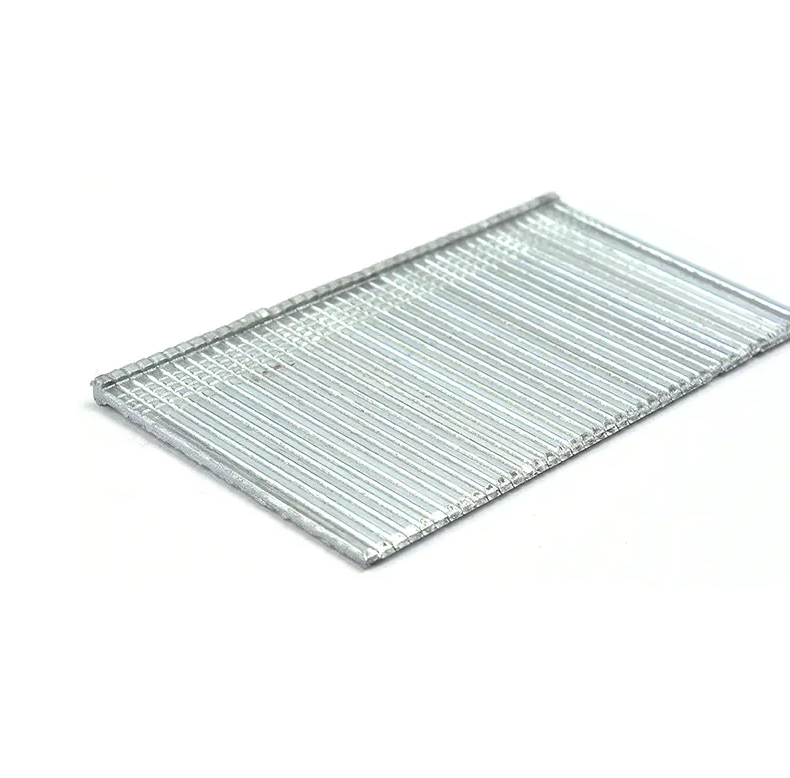
They are not new. They are not experimental. Yet they appear more often in everyday work discussions, especially in interior construction, furniture assembly, and general finishing tasks where flexibility matters more than heavy structural strength.
The reason is not technical advancement. It is practical convenience shaped by real working conditions.
Why does a mid-range size naturally become more common?
In real construction and woodworking environments, material selection rarely follows strict formulas. Workers often rely on experience, habit, and what performs reliably under different conditions.
30mm brads sit in a middle position that feels practical in many situations. They are long enough to provide stable holding in common interior materials, yet not so long that they create unnecessary penetration or visible surface concerns.
This balance becomes more noticeable when work involves mixed materials. A single project may include panels of different thickness, softwood sections, or decorative layers. Switching fastener sizes repeatedly slows down progress.
Over time, a "middle-use" size naturally becomes more frequently selected.
Where are 30mm brads used most often in daily work?
The use of brads is not limited to a single trade or task. Their appearance is more common in general interior environments where finishing quality is more important than heavy load-bearing strength.
Typical usage includes:
- interior molding and trim installation
- cabinet backing and side panel fixing
- light furniture assembly and repair
- decorative wooden structures
- general indoor finishing tasks
In these situations, materials are usually not extremely thick, but they still require secure fastening that does not damage surface appearance.
A nail that is too short may not hold reliably. A nail that is too long may create visible marks or require additional finishing work afterward.
This middle range reduces that uncertainty.
How do different nail lengths behave in real projects?
In workshop practice, fastener selection is rarely rigid. It changes based on material behavior, tool familiarity, and even environmental conditions such as humidity or wood density.
A simple comparison helps show the practical difference:
| Length Category | General Behavior in Use | Common Application Style | Workshop Preference |
|---|---|---|---|
| Short brads | Light penetration, minimal surface impact | Thin panels, delicate finishing work | Used when appearance is critical |
| 30mm brads | Balanced penetration and holding strength | General interior work, mixed materials | Frequently chosen for everyday tasks |
| Longer brads | Deeper holding, stronger grip | Thicker materials, heavier assembly | Used selectively with more attention |
This table does not define rules. It reflects how choices often appear in actual working environments.
Why do workshops try to reduce tool variation?
Another reason behind the increasing use of brads is not related to performance alone, but to workflow simplification.
In many workshops, especially smaller ones, managing multiple fastener sizes can slow down work. It requires sorting, labeling, and switching during different stages of a project.
Even if the time difference is small, repeated interruptions affect overall rhythm.
For that reason, some users prefer to rely on a limited range of sizes that can cover daily tasks.
F30 Brad Nails often become part of this "core selection" because they fit a large portion of general work without frequent adjustment.
This does not replace other sizes, but it reduces constant decision-making during operation.
How does familiarity affect fastener choice?
In practical use, familiarity plays a larger role than specifications.
When workers repeatedly use the same length in similar conditions, they begin to understand how it behaves in different materials. This reduces uncertainty during new tasks.
30mm brads often provide this kind of predictable behavior. Once users become comfortable with their performance, they tend to rely on them more often for general tasks.
This creates a cycle:
use → familiarity → confidence → repeated selection
Over time, this pattern contributes to wider adoption in everyday work.
How does material variation influence usage decisions?
Wood and engineered materials do not behave uniformly. Even within the same project, density and resistance can vary slightly.
This is one reason why mid-range fasteners are often preferred. They reduce the need to adjust for every minor variation.
In softer materials, brads provide sufficient grip without excessive depth. In slightly denser panels, they still maintain acceptable penetration for non-structural use.
This flexibility reduces hesitation during work, especially in fast-paced environments where speed and continuity matter.
What limitations should still be considered?
Although widely used, brads are not suitable for every application.
In thicker wood or structural assembly, longer fasteners remain necessary to ensure stable holding strength. In very thin or decorative surfaces, shorter brads may be more appropriate to avoid visible marks.
The role of brads is better understood as a general-purpose option rather than a universal solution.
Recognizing this boundary helps avoid misuse and improves consistency in results.
How does workflow efficiency connect to fastener choice?
Efficiency in woodworking is not only about working faster. It is also about reducing interruptions and maintaining flow.
Every time a fastener size needs to be changed, even briefly, work rhythm is interrupted. Over the course of a project, these interruptions accumulate.
Using a size that fits a wider range of tasks reduces these small breaks.
This is one of the quiet reasons why mid-range sizes like brads become more common in general work environments.
What role do DIY users play in this trend?
Beyond professional workshops, DIY users also influence demand patterns.
Home improvement projects often involve mixed materials and less predictable conditions. In these situations, users tend to prefer a size that works in multiple scenarios without requiring detailed technical selection.
30mm brads fit this expectation well.
They are simple to understand, easy to apply, and flexible enough for a wide range of household tasks such as small repairs, decoration work, or light furniture assembly.
As DIY activity grows in many markets, this preference becomes more visible.
How do suppliers respond to practical usage patterns?
Suppliers tweak their stock and packaging mainly to match how buyers actually use goods, instead of pushing preset product plans onto the market.
Once 30mm brad nails see steady, recurring orders, suppliers roll out more packing options. They make small packs suited for individual small workshops alongside large bulk shipments for wholesalers to resell.
Manufacturers also start tightening checks on nail straightness and surface quality. Buyers'regular storing and moving work easily causes defects that ruin onsite application, so suppliers prioritize uniform product condition.
All these tweaks focus on matching field needs, without overhauling the core design of the brads themselves.
Why do small material choices matter in real work?
Picking one nail length over another looks trivial from a quick glance.
Inside active workshops though, this tiny pick directly impacts production smoothness, finished product look, and how well raw materials get put to use.
30mm brads grow into a mainstream pick not by phasing out other nail sizes, but because they fit regular assembly jobs on site.
Workers cut down frequent size swaps, keep finished work uniform, and get dependable fastening results across multiple base materials. Slowly this nail becomes their go-to standard instead of an occasional alternative.
A quiet shift shaped by daily practice
The growing use of brads is not the result of a single factor.
It comes from repeated decisions made in workshops, job sites, and home projects. Each small choice builds a pattern over time.
Eventually, that pattern becomes visible in broader usage trends.
In this sense, the popularity of 30mm brads is less about change and more about adaptation to practical working habits.

 Quick Links
