


 English
 русский
 中文简体
中文简体 عربى
عربى
The question appears often on job sites and in home workshops. Many people want faster installation. They look at sturdy concrete nails and wonder if they can skip the step of pre-drilling. The idea sounds simple. Just hammer the nail into the surface and move on. Yet the reality is more layered. Safety, material condition, and working method all play a role.
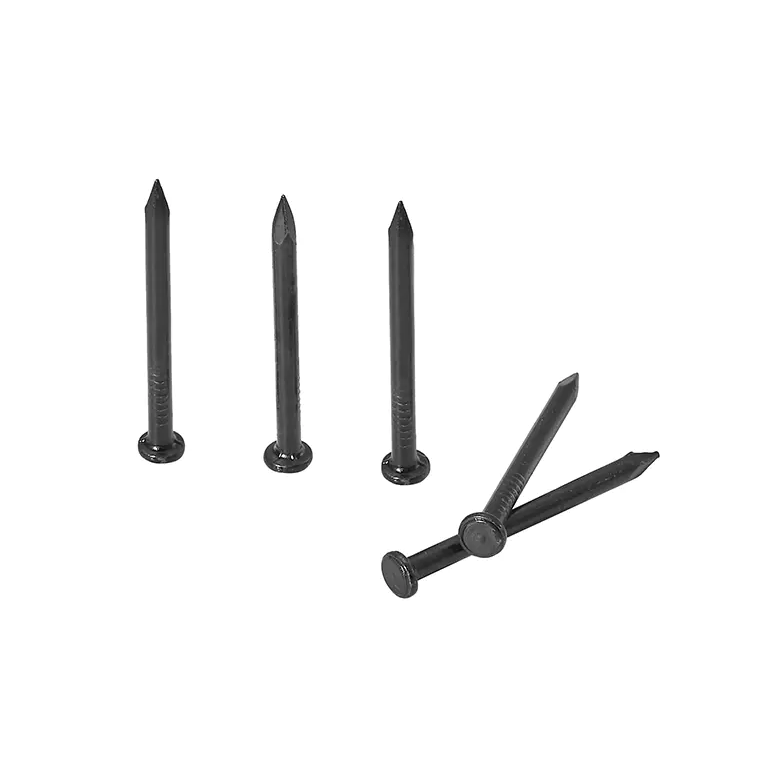
In recent industry discussions, this topic has gained attention. Contractors, suppliers, and DIY users are all weighing speed against control. The result is not a single answer, but a set of conditions that shape what is considered safe.
What Happens When You Drive Concrete Nails Without Pre-Drilling?
Concrete doesn't give up easily. It resists penetration by nature, and when you drive a nail straight into it, force spreads outward from wherever the nail hits. That pressure can trigger small cracks — sometimes invisible at first, sometimes expanding into something that weakens the surrounding area over time.
Without a pilot hole guiding it, the nail has to carve its own path through the material. That process generates friction and vibration, and both work against you here. Brittle material tends to chip. A nail hitting resistance at an angle tends to bend or deflect off course entirely.
Direct driving does work sometimes, to be fair. It really comes down to surface hardness and nail condition more than anything. A clean, steady strike matters a lot more than how fast you're swinging.
Is Direct Hammering Always Unsafe?
Not automatically, no. Plenty of situations allow for direct hammering as long as it's done carefully. Light-duty jobs, temporary fixtures, softer surfaces — these tend to tolerate it fine. Control is really the deciding factor here, not the method itself.
Experienced workers often test a small patch before committing to the full job. They watch how the surface responds. Early cracking means stop immediately. Clean entry means proceed, but carefully.
Safety concerns don't disappear just because the technique works, though. Flying fragments, unexpected rebounds, uneven penetration — these show up even when everything mostly goes right. That's exactly why protective gear stays on the checklist even for quick, small tasks.
How Does Surface Condition Affect Safety?
Surface condition ends up mattering more than almost anything else in this equation. Concrete isn't one uniform material — some surfaces have aged and softened slightly, others just got poured and are still rigid, and some hide voids or uneven density you can't spot just by looking.
| Surface Condition | Reaction to Direct Nailing | Safety Consideration |
|---|---|---|
| Older, slightly worn | May allow easier penetration | Monitor for hidden cracks |
| Dense and hard | Strong resistance | Higher risk of splitting or rebound |
| Rough or uneven | Unstable contact point | Increased chance of misalignment |
| Damp or weathered | Variable response | Check for surface weakening |
Even a single structure can shift in condition from one spot to the next. That's exactly why a quick visual check and a light test strike tend to become standard practice before committing to anything bigger.
Why Do Some Professionals Still Prefer Pre-Drilling?
Pre-drilling gives you a controlled path from the start. Less stress hits the material, and the nail gets guided in straight instead of fighting its own way through — which naturally improves consistency across a whole job.
A lot of professionals just value predictability more than saved seconds. Knowing exactly how the material's going to respond is worth something, and a pilot hole delivers that. Less surface damage, less effort during the actual install.
There's a genuine safety angle here too. Less resistance means less impact force, which means fewer vibrations and fewer surprise movements mid-strike. Over time, that approach tends to protect both efficiency and the material itself.
Can Skipping Pre-Drilling Save Time?
On the surface, sure — skipping a step usually feels faster in the moment. But that early time savings has a habit of evaporating if problems crop up down the line.
A bent nail has to come back out, and that process eats time and can chew up the surface even more in the process. Cracks mean repairs, and repairs mean extra steps that can easily cancel out whatever speed you gained at the start.
A lot of work environments have quietly shifted toward steady, uninterrupted progress rather than chasing quick shortcuts. Fewer interruptions tends to beat a fast start that stalls out halfway through.
What Risks Should Users Be Aware Of?
A handful of risks come up again and again in these discussions:
Surface cracking.
Concrete can fracture under sudden pressure, and even hairline cracks have a way of growing over time.
Nail deflection.
Uneven resistance can send a nail off course mid-strike, cutting into its actual holding strength once it's seated.
Personal safety concerns.
Fragments can chip off on impact. Eye and hand protection tend to be recommended even for jobs that look minor.
Reduced fastening strength.
A poorly seated nail just won't hold as securely, which can undercut the stability of whatever's attached to it.
Tool strain.
Repeated hard strikes wear down tools faster than steady, controlled ones do.
How much any of these actually matter comes down to technique. Careful handling cuts down some of the risk — but not all of it, no matter how skilled you are.
When Might Direct Nailing Be Considered Acceptable?
There are cases where direct nailing is used with reasonable results. These situations usually share a few characteristics:
- The load is light
- The attachment is temporary
- The surface shows no signs of brittleness
- The user has experience handling similar materials
Even then, users tend to proceed slowly. They check each step. If the material reacts poorly, they adjust their method.
This approach reflects a broader trend in the industry. Flexibility is valued, but not at the cost of safety.
How Do Work Environments Influence the Decision?
The setting you're working in matters more than people usually give it credit for. Indoor jobs tend to offer better control — steady lighting, easier surface inspection, stable conditions throughout.
Outdoor work throws in more variables. Weather shifts material condition. Temperature swings change how surfaces respond to impact. Visibility isn't always consistent either.
Noise and tight spaces shape tool choice too. Cramped areas tend to push people toward more controlled methods, while open spaces make direct force feel a lot more comfortable to apply.
No single rule covers every scenario here — the environment itself is part of the decision.
Are There Practical Ways to Improve Safety Without Pre-Drilling?
For anyone set on skipping the pilot hole, a few habits genuinely help cut down the risk:
- Start with light test taps before committing
- Keep the nail aligned and steady throughout
- Avoid swinging too hard right out of the gate
- Watch closely for early signs of cracking
- Wear protective gear regardless of how small the job seems
None of this eliminates risk entirely, to be clear. What it does is keep that risk manageable. Staying alert throughout the process tends to matter more than raw speed ever does.
Most experienced users end up adjusting their approach mid-job based on what they're actually seeing and feeling — that kind of real-time attention beats rushing through on autopilot every time.
What Is the Current Industry View?
Nobody in the industry treats this as a clean yes-or-no question anymore. It's really become a situational call. A lot of professionals default to pre-drilling whenever stability really counts, while others are perfectly comfortable with direct nailing in more limited, low-stakes contexts.
There's a clear push toward balanced methods across the board. Efficiency still matters, obviously, but nobody wants it coming at the expense of safety or durability. Most conversations in the field now center on reading conditions rather than following one rigid playbook.
Training and general awareness keep coming up too. The more someone understands how materials actually behave, the easier it gets to pick the right approach for whatever job's in front of them.
Does Skill Level Change the Outcome?
Experience genuinely shifts the outcome here. Skilled workers read surfaces better almost instinctively — they catch subtle signs of stress or weakness that a newer worker might completely miss, and they adjust technique without much hesitation.
Less experienced users tend to lean harder on trial and error, and that naturally raises the odds of mistakes creeping in. For that group, pre-drilling offers a genuinely safer starting point — it strips out a lot of the uncertainty and builds real confidence along the way.
Even veteran workers stay cautious, though. Materials can still surprise anyone, no matter how many years they've got under their belt, and that awareness keeps shaping decisions on site every single time.
How Should Users Decide What to Do?
Three questions really drive the whole decision:
- What condition is the surface actually in?
- What's the attachment ultimately being used for?
- How much control does this particular job actually demand?
Working through these shifts the whole conversation away from speed and toward what genuinely suits the task at hand.
In real practice, a lot of people end up blending both methods — direct nailing in one spot, pre-drilling in another, depending entirely on what each section of the job actually calls for. That flexible approach just reflects how messy real-world conditions tend to be.
The conversation around sturdy concrete nails keeps evolving right alongside broader shifts in how work gets approached generally. Efficiency, safety, and material care all stay part of that same equation — none of them winning out completely over the others.

 Quick Links
