


 English
 русский
 中文简体
中文简体 عربى
عربى
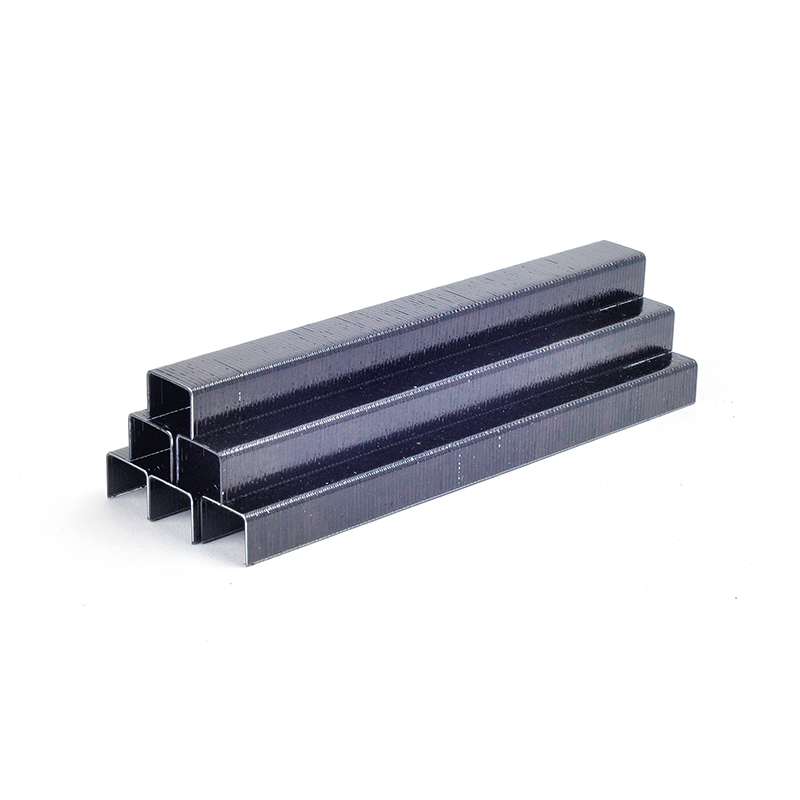
Fine wire fastening solutions remain essential in furniture production, light assembly, and workshop environments. 80 Staples are widely used for securing soft and lightweight materials where appearance and controlled penetration matter. Their thin-gauge structure supports clean stapling without damaging fabric, insulation, or paper-based components.
For factories handling upholstery, screening, or case back attachment, selecting the correct staple type directly influences workflow consistency and finished product quality. Understanding how 80 Staples performs and how an experienced 80 Staples Manufacturer manages production helps reduce supply uncertainty and application mismatch.
Structural Features of 80 Staples
80 Staples are categorized as fine wire staples, typically produced from high-carbon steel or stainless steel. The wire is drawn to a thin diameter, then formed into consistent crown and leg dimensions through automated equipment.
The thin gauge wire reduces driving resistance. This allows smoother stapling when using pneumatic or manual staplers. Operators experience steady firing without excessive force, which is particularly useful in repetitive upholstery work.
Common Industrial Uses of 80 Staples
Furniture Upholstery
In sofa and chair manufacturing, fabric must be secured tightly to wooden frames without visible tearing. 80 Staples provide stable holding strength while maintaining a smooth fabric finish. Their compact profile supports hidden fastening beneath cushions or trim.
Felt and Insulation Installation
When attaching felt or light insulation materials, thicker staples may compress or tear fibers. Fine wire 80 Staples pass through these materials more gently while still securing them in place.
Screening and Case Back Assembly
Screen mesh installation requires staples that hold tension without being visually intrusive. 80 Staples anchor mesh securely while keeping the fastening line discreet. In case of back applications for light packaging or panels, they maintain alignment without creating bulky marks.
Production Advantages in Workshop Environments
Factories value 80 Staples not only for their appearance but also for operational efficiency.
Lower Driving Resistance
Thin wire staples require less force to penetrate materials. Pneumatic tools operate with a stable rhythm, reducing interruptions caused by incomplete penetration.
Reduced Material Damage
Soft materials remain intact around the entry points. This is especially important in decorative upholstery or layered textile applications.
Consistent Feeding
Well-manufactured staple strips maintain uniform spacing and bonding strength. This minimizes jamming during high-volume usage.
Matching 80 Staples to Application Requirements
Not all light-duty tasks require the same leg length. Selecting the correct specification improves fastening reliability.
Short legs for paper stacks or thin fabric
Medium legs for upholstery frames
Corrosion-resistant options for storage in humid warehouses
Clear communication of material thickness and tool type helps an 80 Staples Manufacturer provide suitable recommendations.
Why 80 Staples Remain a Practical Choice
In light assembly lines, fastening solutions must balance holding power and surface appearance. 80 Staples offers that balance. They secure soft materials effectively while maintaining a clean finish.
For furniture factories, insulation installers, and screening workshops, consistent supply quality is essential. Working with a technically capable 80 Staples Manufacturer helps maintain production stability and reduces unexpected tool compatibility issues.
Fine wire staples may appear simple, but their performance depends on wire processing, forming precision, and controlled inspection standards. When these elements are aligned, 80 Staples support smooth operations across a range of light-duty industrial applications.

 Quick Links
