


 English
 русский
 中文简体
 عربى

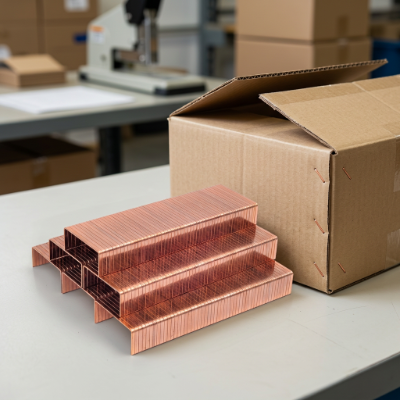
Copper staples for boxes are carton closing staples with a copper-colored finish. Packaging lines use them to join overlapping corrugated flaps with a mechanical stapling machine. Whether they suit a given job depends on the carton structure, the closing machine, the staple dimensions, and the conditions the carton will meet in storage and transport. The color of the finish is only one part of the specification.
Where Are Carton Closing Staples Used Instead of Tape?
Tape suits many everyday cartons, especially on lines built around adhesive sealing. Some boxes call for a different approach. Thick overlapping flaps, heavier contents, or a production line already set up for stapling can all point toward a mechanical closure.
A staple passes through the cardboard layers and folds against the inside surface. The joint is held by a physical fastening point, not by adhesive contact.
Typical uses include:
- Corrugated cardboard boxes
- Cartons for industrial parts and equipment
- Warehouse shipping boxes
- Packaging that needs extra closure support
- Cartons run on mechanical closing machines
A staple that works on one carton may not suit another. A change in board thickness or flap construction can alter how the staple drives and closes. For most manufacturers, the deciding factor is the equipment already on the line. If a carton stapling machine is in place, choosing a compatible staple is usually simpler than changing the closing method.
What Does the Copper Finish Mean?
Copper-finished staples are not necessarily made of solid copper. In many cases the staple is a steel wire with a copper-related surface treatment. The wire gives the staple its structure, and the finish is one line in the product specification.
Appearance alone does not tell a buyer much. Ask the supplier for the base material and the finishing process.
Finish terms also vary. Copper coating, copper plating, and other surface treatments are not interchangeable labels, so confirm which one applies to the product being quoted.
The finish affects appearance and surface characteristics. It does not settle how a staple will perform in every environment. If cartons will sit in a humid warehouse or travel through changing climates, say so in the inquiry. The supplier can then advise whether the offered finish fits those conditions.
Will the Staples Fit the Carton Closing Machine?
Check this before ordering. A carton closing staple is made for a specific type of equipment, and small differences in shape, size, wire form, or strip format can affect feeding and closing.
Confirm these points:
- Staple form: Does the machine use strip staples or coil staples?
- Dimensions: Do the width, leg length, and crown shape match the machine's requirements?
- Wire characteristics: Is the wire suitable for the feeding and driving mechanism?
- Carton construction: Can the legs pass through the board layers and close properly?
- Machine condition: Is the equipment running normally, or has it had feeding problems?
Choosing a replacement by looking at an old staple is risky. The original packaging or label usually carries the specification. If that is missing, the machine model or a physical sample gives the supplier enough to work with.
What Happens When the Wrong Staple Is Used?
A staple can look right in the hand and still behave badly on the line.
- Feeding trouble. A strip that does not match the machine may move unevenly, stop, or need repeated adjustment.
- Incomplete fastening. If the dimensions do not suit the carton, the legs may not clinch as intended. The joint can end up loose or uneven.
- Changes in the board. A staple that works on a light carton may behave differently on a thicker or differently built one.
When problems appear, look at the whole setup before blaming the staple. Machine wear, incorrect adjustment, board thickness, and staple compatibility can each contribute. If jams start after a change of supplier, compare the old and new staple specifications first.
Copper-Finished vs. Galvanized Staples: What Should Buyers Compare?
Both finishes are used in industrial fastening, but the surface treatments differ. A copper-finished staple has a copper-related coating. A galvanized staple has a zinc coating. The decision should rest on the specification and working conditions, not on which finish looks more suitable.
| Comparison Point | Copper-Finished Staples | Galvanized Staples |
|---|---|---|
| Surface appearance | Copper-colored | Zinc-coated look |
| Surface treatment | Copper-related finish | Zinc coating |
| What to confirm | Coating process and suitability for the application | Zinc coating and suitability for the application |
| Machine compatibility | Must match the machine specification | Must match the machine specification |
| Selection basis | Carton type, equipment, buyer requirements | Carton type, equipment, buyer requirements |
Neither finish should be assumed to offer a set level of corrosion resistance without supporting product data. For special storage or transport conditions, ask the manufacturer about coating details and any test information it can provide.
How Should Buyers Prepare an Inquiry?
A supplier can respond much more usefully when the inquiry includes application details. A request for a price with no specification tends to lead to back-and-forth. Prepare the following:
- Describe the carton. State whether it is a standard corrugated shipping box, a heavy-duty carton, or industrial packaging. Add the board structure and the number of layers being joined, if known.
- Share the machine details. The brand and model help identify the staple form. Photos of the staple-loading area also help.
- Send a sample of the current staple. A physical sample lets the supplier compare shape and dimensions, particularly when the original specification is lost.
- Explain the finish requirement. If copper-finished staples are requested for a reason, such as an existing production specification or an appearance requirement, include it.
- State the quantity and packing method. The expected order volume and how the staples will be stored and used help the supplier suggest suitable arrangements.
None of this needs to be elaborate. A few clear photos, the machine model, and a sample are often enough.
Why Test Samples Before a Bulk Order?
A specification sheet cannot show how a staple behaves on a working line. Sample testing is useful when changing suppliers, introducing a new carton design, or switching to a different surface finish.
During a trial, operators can check whether the staples feed smoothly, whether the machine drives them consistently, and whether the closed joint meets the packaging requirement. Use the actual cardboard from production. A different board may give results that do not carry over.
Once a sample performs as expected, the confirmed specification becomes a reference for repeat orders, which reduces misunderstandings later.
What Should You Ask the Manufacturer to Confirm?
Before finalizing an order, ask the supplier to clarify:
- The base material of the staple
- The surface treatment used
- Available staple forms and dimensions
- Compatible carton closing machines
- Whether the supplier can check a sample or an existing specification
- Available packaging options for the order
These questions separate a product that looks similar from one that matches the application.
CN Chaoyue Nail offers a product range that includes carton closing staples. Buyers can send machine information, existing staple samples, or packaging requirements to discuss a suitable specification.
Making the Selection
Copper staples for boxes fasten overlapping cardboard sections as part of a mechanical carton closing process. They are used on shipping boxes, corrugated cartons, and industrial packaging.
The finish does not decide suitability on its own. The machine, staple form, board structure, and working environment need to be considered together.
A practical first step is to identify the staple the line uses now. Compare its dimensions, check the machine requirements, and send the supplier a sample. That gives both sides a clear basis for confirming compatibility and discussing the order.

 Quick Links

