


 English
 русский
 中文简体
 عربى

Among the questions that arrive at a fastener factory, the finish generates more confusion than any other feature of the product. With box staples copper in particular, two strips can look nearly identical in a photograph and still behave differently on a packing line, because the coating is the part of the fastener that people discuss least and judge soonest.
What Is a Copper Finish on a Carton Staple?
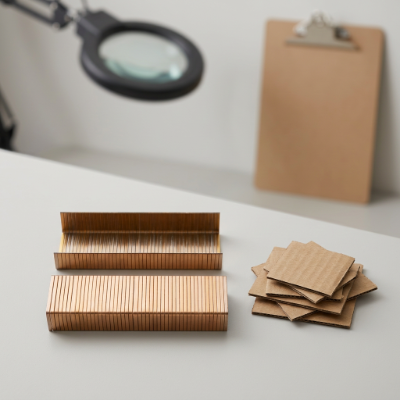
Start with the structure of the product, because the name invites a mistaken reading. A carton closing staple is formed from steel wire. The copper tone sits on the surface as a treatment applied after or during forming, not as the body of the fastener itself.
That division of labour matters. The steel wire carries the mechanical work: it holds the shape, resists the driving force, and takes the load once the carton is stacked. The surface treatment carries everything visible and tactile: the tone on the crown, the feel of the strip in a magazine, and the way the wire ages in storage.
Reading a specification the same way prevents later disputes. Two sentences, not one: what the wire is, and what the surface is. A description that blends them into a single phrase leaves both parties guessing about which one a comment refers to.
What Does the Coating Actually Do in Service?
Three effects, none of them dramatic in isolation, all of them real across a season of shipments.
Surface behaviour matters in practice more than any catalogue suggests, even though it is rarely mentioned. A treated wire slides against the steel channel of a feeding magazine with a slightly different feel than bare wire, and that difference shows up as feeding consistency over a long shift. Operations that run high volumes notice this before anything else, because feeding is where small surface changes become visible in output.
Appearance follows. On kraft board, a copper-toned crown sits warmly against the brown liner, which is why many packaging buyers prefer it for cartons that face the end customer. A closure that reads as part of the box rather than a repair on it has quiet commercial value, especially in retail-ready packaging where the carton itself is on display. It is one reason enquiries for box staples copper increasingly name the tone alongside the size: the finish has become part of how the product is judged.
Storage life is the third effect. A treated surface ages more gracefully in a warehouse than bare wire, holding its appearance through weeks of stock rotation. The key word is gracefully rather than indefinitely: the treatment slows visible change, it does not stop it.
What Does the Coating Not Do?
Two clarifications belong in every professional conversation about the finish.
It is not a strength rating. The holding power of a staple comes from the wire, the profile and the clinch, not from the colour on the crown. A buyer comparing two products on holding performance is comparing wire and geometry; the finish does not enter that calculation.
It is not immunity to moisture. Any coated fastener still has cut ends, and still meets scratches along the feeding path and condensation inside a sea container. What the treatment does is extend the margin: a sealed inner box kept closed until the line needs it, combined with a treated surface, behaves differently from loose staples stored in damp air. Packing and storage do as much work as the coating itself, which is why professional enquiries now mention route and storage alongside the finish.
Why Does the Same Finish Behave Differently Between Batches?
Buyers occasionally observe that two deliveries described identically do not perform identically. The explanation rarely lies in the coating chemistry alone.
Formation is one factor. The angle of each bridge, the tightness of the collation and the flatness of the strip decide how the product travels through a magazine, and small differences there read as surface differences to the operator.
Process timing is another. A treatment applied and controlled within a consistent window produces a more uniform surface than one allowed to drift, and drift shows up as tone variation between runs.
Storage between factory and line is the third. A box that sat two weeks in a humid transit shed arrives in a different state from one that moved directly into a dry warehouse. When a buyer reports that a batch looks or feeds differently, the honest answer usually involves all three factors, not one.
How Is the Finish Checked Before Shipment?
Inspection of the surface treatment is straightforward, and describing how the finish on box staples copper is checked helps buyers know what to ask about.
Visual checks cover tone uniformity across the batch, the absence of bare spots, and freedom from scratches that reach the wire underneath. This is done under ordinary lighting rather than flattering light, because the product will be seen that way on a packing line.
Formation checks confirm that the treated strips still sit flat, separate cleanly, and load without persuasion. A surface that looks right but feeds badly has failed the practical part of the inspection.
Retention of a reference sample closes the loop. A sealed sample from the approved run, kept on file, gives both manufacturer and buyer a physical baseline for future deliveries. When a question arises months later, comparison against that baseline settles it faster than any written description.
| Inspection point | What is checked | Why it matters on the line |
|---|---|---|
| Tone uniformity | Consistency of colour across the batch | Uniform appearance on finished cartons and pallets |
| Surface integrity | No bare spots, no scratches reaching the wire | Appearance now and behaviour later in storage |
| Feeding behaviour | Strips sit flat, separate and load cleanly | Feeding consistency through a full shift |
| Packing condition | Sealed inner bags, intact outer cartons | Surface quality preserved from factory to line |
| Batch marking | Readable reference on each outer carton | Traceability when a question arises after delivery |
How Should the Finish Be Specified for a Carton Line?
A finish chosen by adjective is a finish chosen twice. Specifying it in a sentence avoids that.
The useful sentence names four things: the base wire, the surface treatment, the packing arrangement, and the appearance expectation. Appearance expectation means deciding in advance whether the seam should blend into the carton or stand apart from it, because that decision drives the choice between finishes more than any technical comparison.
Environment settles the rest. Cartons stored for long periods in humid conditions, or shipped through climates that produce condensation, put packing and treatment questions at the centre. Cartons that ship once and are opened quickly put appearance at the centre. Neither situation is wrong; they simply weight the specification differently, and a manufacturer who knows which situation applies can propose the configuration that fits it.
Questions That Recur in Professional Conversations
Does a copper tone change how the staple holds?
No. Holding comes from the wire, the profile and the clinch. The finish influences surface behaviour and appearance, not mechanical performance.
Why does the tone vary slightly between production runs?
Small variation between runs is normal in any surface treatment. What matters is whether the variation affects feeding or the look of the finished seam, and a stated tolerance in the specification keeps that conversation short.
Can two finishes run on the same line?
Technically the tools rarely object. Practically, mixing finishes creates visible inconsistency across a pallet that nobody notices until the customer does, so lines usually standardise per carton type.
How should a surface question be raised after delivery?
With the batch number and the retained sample reference. A traceable question gets a traceable answer; a question described only by colour does not.
What should a buyer send when enquiring about a finish?
The stapler model, a photo of the seam currently running, and a sentence on storage conditions. Those three items let a manufacturer describe the right configuration instead of a generic one.
A Finish Deserves a Sentence, Not an Adjective
Professional purchasing has moved past describing fasteners as simply copper or simply coated. The finish is a defined element of the product, with its own role, its own limits and its own inspection points, and it belongs in the specification in writing.
For factories reviewing their closing consumables, that sentence is worth writing before the next order rather than after a complaint lands. Discuss the wire, the treatment, the packing and the appearance expectation with your supplier of carton closing staples, keep a reference sample from the approved run, and the finish will behave on your line the way the specification says it should.

 Quick Links

