


 English
 русский
 中文简体
 عربى

When buying carton closing staples, a small difference in the product description can lead to a different purchasing decision. Copper-finished and galvanized staples are a good example. They may look similar in shape and serve a similar purpose, but their surface treatments are not the same.
For packaging manufacturers, the choice between copper and galvanized staples for boxes usually comes up when replacing an existing product, comparing suppliers, or reviewing the materials used on a carton closing line. The color is easy to identify. What needs more attention is the coating, the staple construction, and whether the product suits the machine.
A silver-grey staple is not automatically a suitable replacement for a copper-colored one. Before making a change, it helps to understand what actually separates these two products.
The Difference Starts with the Surface Treatment
Take two carton closing staples and place them side by side. One may have a reddish copper-colored surface, while the other has a silver-grey appearance. This is the difference buyers usually notice immediately.
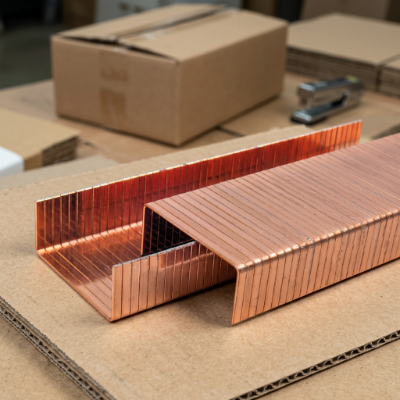
The copper-colored version is generally described as copper-finished or copper-coated, depending on the manufacturing process. In many applications, the staple uses steel wire as its base material. The copper-related treatment is applied to the surface. It should not be assumed that the entire staple is made from copper.
Galvanized staples, on the other hand, have a zinc coating. Galvanizing is a surface treatment used on steel products in various industrial applications.
The distinction is important when checking a product specification. A supplier's description should explain the actual material and finish rather than relying on a color name alone. Two products may look alike in a catalogue photograph but have different material details.
For buyers, it is worth confirming three things:
- What material is used for the staple wire?
- What surface treatment is applied?
- Does the stated finish match the requirement of the packaging application?
These questions are especially useful when a purchasing department is comparing quotations from different suppliers.
What Does a Copper Finish Mean in Actual Use?
Copper-finished staples are used in carton closing applications where this type of finish is specified. Some buyers continue using them because they are already part of an established packaging process. Others may request them when sourcing replacement staples for existing equipment.
The copper-colored surface makes the product easy to recognize, but appearance does not tell the whole story.
A common misunderstanding is that a copper-colored staple must be made entirely from copper. That is not necessarily the case. The wire base and the surface treatment are separate parts of the product specification. If the base material matters to your application, ask the manufacturer to confirm it.
Storage conditions also deserve attention. Metal products can be affected by moisture and the way they are packed and stored. A copper-colored finish should not be treated as proof that a staple can withstand every storage environment.
If the products will be kept in a warehouse where humidity or condensation is a concern, mention this when requesting a quotation. The manufacturer can clarify the finishing process and provide available product information for evaluation.
Why Are Galvanized Staples Used?
Galvanized staples have a zinc-coated surface. This type of finish is common in steel fastening products, including some staples used for packaging.
For a buyer, the main point is to understand what the coating specification actually covers. The term galvanized identifies a zinc-related treatment, but it does not tell you every detail about the finished product. The coating process and product quality need to be confirmed with the manufacturer when they are relevant to the application.
It is also unwise to assume that every galvanized staple has the same surface characteristics. Products from different manufacturing processes may have differences that are not obvious from a photograph.
When considering galvanized staples for a carton closing line, check the product specification and compare it with the staples currently in use. If the change involves both the coating and the staple dimensions, testing becomes even more important.
Copper vs. Galvanized: What Should You Compare?
The two finishes can be compared in a straightforward way, but there is no reason to assume that one is automatically suitable for every packaging job.
| Item | Copper-Finished Staples | Galvanized Staples |
|---|---|---|
| Visible appearance | Reddish or copper-colored | Silver or grey |
| Surface treatment | Copper-related finish | Zinc coating |
| Common base material | Steel wire, subject to product confirmation | Steel wire, subject to product confirmation |
| Product identification | Confirm the actual finishing process | Confirm the zinc coating details |
| Selection considerations | Existing specification and application conditions | Existing specification and application conditions |
| Machine requirements | Must match the equipment | Must match the equipment |
For example, if a buyer is changing from copper-finished staples to galvanized ones, the supplier should confirm whether the proposed product has the correct form and dimensions. The surface treatment is only one part of the comparison.
Will a Different Finish Change the Way a Staple Works?
This is where the discussion becomes more practical.
On a carton closing line, the machine feeds a staple, drives it through overlapping cardboard flaps, and closes its legs to hold the joint together. The process depends on the staple and the equipment working together.
A surface finish may be part of the product requirements, but it is not the only factor behind a successful closing operation. Staple dimensions, wire characteristics, machine condition, and cardboard thickness all matter.
Suppose a factory changes its staple supplier and begins experiencing feeding interruptions. It may be tempting to blame the different coating. However, the problem could also come from a change in staple width, leg length, crown shape, or strip arrangement.
The same applies when a staple does not close properly. The cardboard may be thicker than the material used previously, the machine may need adjustment, or the replacement staple may not match the equipment.
A useful check is to compare the old and new products side by side. Look at the full specification rather than focusing only on the finish.
Can You Replace Copper Staples with Galvanized Staples Directly?
Not without checking compatibility.
A change in surface treatment does not necessarily mean that the staple will have a different shape, but it also does not guarantee that two products are interchangeable. The machine's requirements still apply.
Before making a replacement, check:
- Staple form: Some carton closing machines use strip staples, while others are designed for coil staples. These forms are not interchangeable unless the equipment supports them.
- Dimensions: The crown width, leg length, and overall shape need to match the machine specification.
- Wire construction: Differences in wire characteristics may affect how a staple feeds and closes.
- Carton material: The staple must suit the cardboard layers being joined. A product used for one carton construction may not give the same result on another.
- Machine condition: Worn or incorrectly adjusted equipment can cause problems even when the staple specification is correct.
If the original product is still available, keep a sample. It gives the supplier something concrete to compare against and reduces the chance of confusion caused by incomplete descriptions.
What Should You Do Before Ordering a Different Type?
A sample trial is a sensible step when changing from one finish to another, especially if the staples are used on a regular production line.
Use the actual carton material and the machine that will handle the order. Watch how the staples feed and whether the closed joints look consistent. If there are interruptions or uneven fastening, check the equipment settings and compare the staple specifications.
It is also helpful to record the result. A simple product record can include the staple type, surface finish, dimensions, machine model, and carton application. When the same product needs to be reordered, the purchasing team can refer to this information instead of starting the selection process again.
For buyers who cannot identify the original staple, clear photographs can help. Take pictures of the staple from different angles and include the packaging label if one is available. The machine model is useful too.
Which Details Should You Give the Manufacturer?
A short but clear inquiry is usually more useful than asking for a price based on the words copper or galvanized alone.
When contacting a carton staple manufacturer, provide:
- The surface finish you are looking for.
- A sample or photograph of the current staple.
- The brand and model of the carton closing machine.
- The staple form required by the equipment.
- Information about the carton material.
- The quantity you expect to purchase.
- Any special storage or handling conditions.
If you are still deciding between the two finishes, say so. The manufacturer can explain the available product specifications and help you identify which details need to be checked before ordering.
ChaoyueNail supplies carton closing staples for packaging applications. Buyers can provide their existing staple samples or machine information to discuss product requirements and suitable specifications.
For a repeat order, it is also useful to keep the confirmed sample and product details on file. This gives both the buyer and supplier a shared reference for later communication.
A Simple Way to Make the Decision
Copper-finished and galvanized staples differ in their surface treatment. The former has a copper-related finish, while the latter uses a zinc coating. Both can be considered for carton fastening, provided the product matches the packaging process.
The choice should come from the actual requirements of the production line, not from the appearance of the staple alone. Check the wire material, coating details, dimensions, machine compatibility, and carton construction. If you are changing from one type to another, run a sample trial before placing a regular order.
For packaging buyers, getting these details right at the enquiry stage can save time later. It also gives the manufacturer a clearer understanding of the product needed, rather than leaving the selection to a color description.

 Quick Links

