


 English
 русский
 中文简体
中文简体 عربى
عربى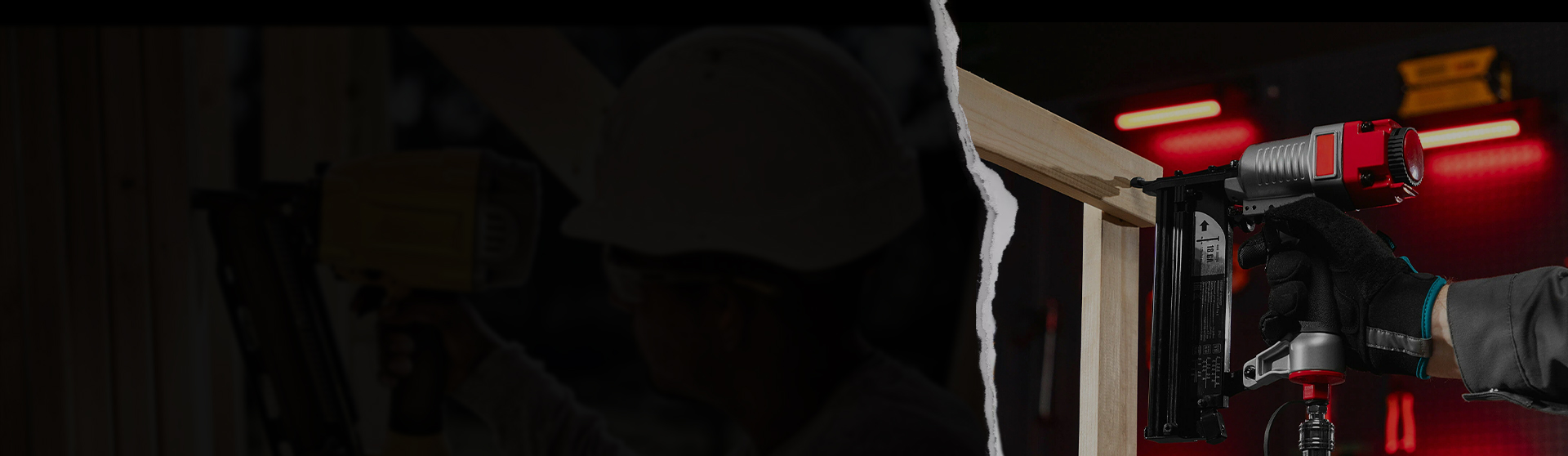
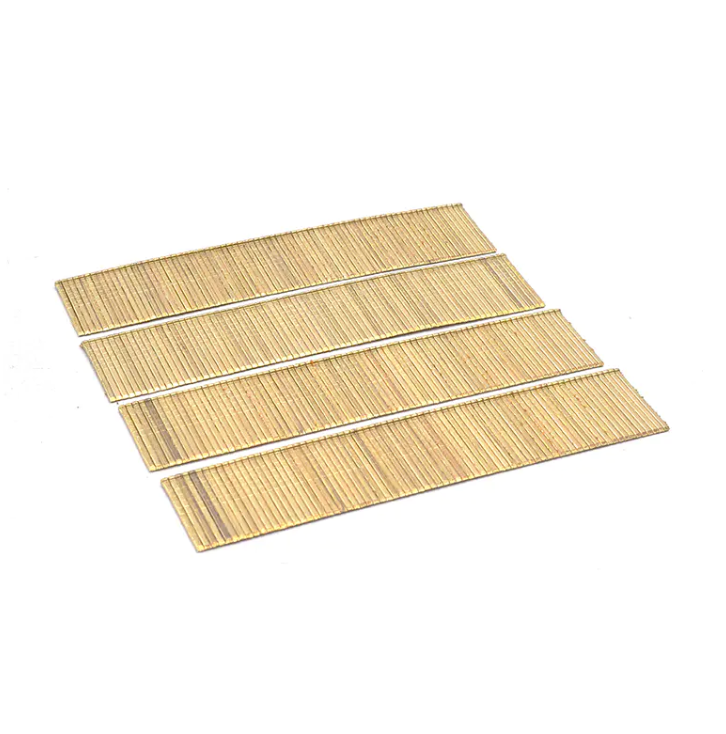
F Brad Nails are widely used in woodworking and finishing work where clean appearance and precise fastening matter. Their slim shape allows them to hold materials together without leaving large marks on the surface. Because of this, they are not used alone. They depend on compatible tools that guide, drive, and secure them into place.
In many workshops and production environments, tool compatibility is not just a matter of convenience. It affects workflow, surface quality, and handling efficiency. Understanding which tools work with F nails helps explain how they are applied across different tasks and settings.
What Makes F Brad Nails Different in Tool Usage?
F nails are designed with a narrow profile. This shape allows them to enter materials smoothly and leave only a small trace. The goal is to support joining without drawing attention to the fastening point.
This structure influences the tools used with them. Not every fastening tool can handle their size or shape. The tool must guide the nail in a straight path and apply controlled force. If the driving force is too strong or uneven, the material surface may be affected.
The compatibility between tool and nail is based on alignment. The nail must sit properly in the tool channel. This ensures smooth feeding and consistent placement during use.
Which Types of Nail Guns Work with F Brad Nails?
The common tools for F nails are nail guns designed for fine fastening work. These tools are built to handle thin nails and place them with minimal surface impact.
They are often used in woodworking, panel assembly, and trim installation. The tool holds a strip of nails and releases them one by one during operation. Each activation drives a nail into the material in a controlled motion.
There are different styles of these tools, but they share a similar function. They guide the nail, control depth, and reduce surface damage. The main difference lies in how they are powered and how they handle continuous use.
These tools are selected based on task type. Light finishing work may require a different handling feel compared to repetitive production tasks.
How Do Manual Tools Support F Brad Nail Use?
While powered tools are common, manual tools still play a role in certain environments. These tools are used when precision is more important than speed.
A manual approach gives more control over placement. Each nail is positioned individually, allowing careful adjustment before driving it in. This is useful for detailed work or small-scale projects.
Manual tools used with F nails are designed to reduce surface marks. They apply force in a controlled way, often with a spring or lever system. The goal is to maintain accuracy without damaging the material.
This method is slower but offers more direct feedback. The user can feel resistance and adjust pressure as needed.
What Role Do Air-Driven Tools Play in Nail Compatibility?
Air-driven tools are widely used in professional environments. These tools rely on controlled pressure to drive nails into materials quickly and evenly.
F nails are often used with this type of tool because of their smooth feeding and consistent shape. The tool holds a strip of nails and releases them in sequence.
The advantage of air-driven systems is consistency. Each nail is driven with similar force, reducing variation between placements. This helps maintain uniform appearance across larger surfaces.
These tools are commonly used in environments where repeated fastening is required. Panels, trims, and decorative surfaces often rely on this method.
How Does Tool Design Affect Surface Quality?
Surface quality is one of the main reasons F nails are chosen. The tool used plays a direct role in achieving this result.
If the tool applies uneven force, the nail may sit too deep or remain too exposed. Both situations can affect the final look of the surface.
Tool design focuses on controlling depth and alignment. A guiding channel keeps the nail straight. A controlled release system ensures steady placement.
Some tools include adjustment features. These allow users to change how deeply the nail enters the material. This helps match different surface types without changing the nail itself.
Even small differences in tool performance can affect the final appearance. This makes tool selection an important step in preparation.
What Materials Are Commonly Fastened Using Compatible Tools?
F Brad nails are often used in materials that require careful surface handling. These include wood-based panels, decorative trims, and lightweight structural elements.
The compatibility of tools depends on how these materials respond to fastening. Softer surfaces may require lighter force. Denser surfaces may need more controlled impact.
Below is a simple overview of common material and tool interaction:
| Material Type | Tool Requirement Focus | Result Expectation |
|---|---|---|
| Soft wood surfaces | Gentle driving force | Smooth surface finish |
| Decorative panels | Precise alignment | Minimal visible marks |
| Composite boards | Stable penetration control | Even fastening depth |
| Thin trims | Fine placement accuracy | Clean edge appearance |
Each material behaves differently. Tool compatibility ensures that the nail performs as expected across these variations.
How Do Feeding Systems Influence Tool Performance?
Feeding systems are responsible for holding and guiding F nails inside the tool. Their design affects how smoothly nails move into position.
A stable feeding system reduces interruptions. If nails shift or jam, the workflow slows down. This can affect consistency in placement.
Feeding systems are designed to match nail shape. Since F nails are slim and uniform, they move easily when properly aligned. However, slight variations can still affect performance.
Regular maintenance of the feeding path helps maintain smooth operation. Clean surfaces and correct alignment reduce friction and improve stability.
Why Is Depth Control Important in Compatible Tools?
Depth control determines how far the nail enters the material. This is important for both appearance and function.
If the nail is driven too deeply, it may damage the surface. If it is not deep enough, it may not hold properly. Compatible tools help manage this balance.
Many tools include adjustable settings. These allow users to match depth with material type. This flexibility supports different applications without changing equipment.
Depth control is especially important in visible surfaces. In decorative work, even small variations can be noticeable.
How Do Operators Choose the Right Tool for F Brad Nails?
Tool selection is based on task requirements rather than complexity. Operators consider material type, surface expectations, and working environment.
Some tasks require repeated fastening across large surfaces. Others focus on small, detailed sections. Each situation benefits from a different tool feel.
Experience also plays a role. Users often develop preferences based on how tools respond during use. Handling comfort, response speed, and control all influence choice.
The goal is not to find a universal tool but to match the tool to the task.
What Challenges Can Occur with Tool Compatibility?
Even when tools are designed for F nails, challenges can appear. These are often related to alignment, feeding, or surface response.
One common issue is inconsistent placement. This may come from slight variations in tool handling or material resistance.
Another issue is feeding interruption. If nails do not align properly, the tool may pause or misfire.
Surface marking can also occur if pressure is not balanced. This is often related to depth settings or material sensitivity.
These challenges are usually managed through adjustment rather than replacement. Small changes in technique or settings can improve results.
How Does Tool Compatibility Influence Workflow Efficiency?
Tool compatibility affects how smoothly work progresses. When tools and nails work well together, movement becomes steady and predictable.
This reduces pauses during operation. It also helps maintain consistent output across repeated tasks.
In environments where speed and appearance both matter, compatibility supports balance. Work continues without frequent correction or adjustment.
Efficiency in this context is not about speed alone. It is about maintaining steady results with minimal interruption.
F Brad nails rely on compatible tools to deliver their intended performance. Whether powered or manual, each tool type contributes to how the nail interacts with material surfaces. The connection between tool design, handling, and material response shapes the final outcome in visible and practical ways.

 Quick Links
