


 English
 русский
 中文简体
中文简体 عربى
عربى
Construction sites rarely pause for small issues, yet small issues are often where delays begin. A missing batch of materials, slight variation in fasteners, or inconsistency between deliveries can quietly reshape a workflow. Concrete nails belong to this category of simple components that carry more weight than their size suggests.
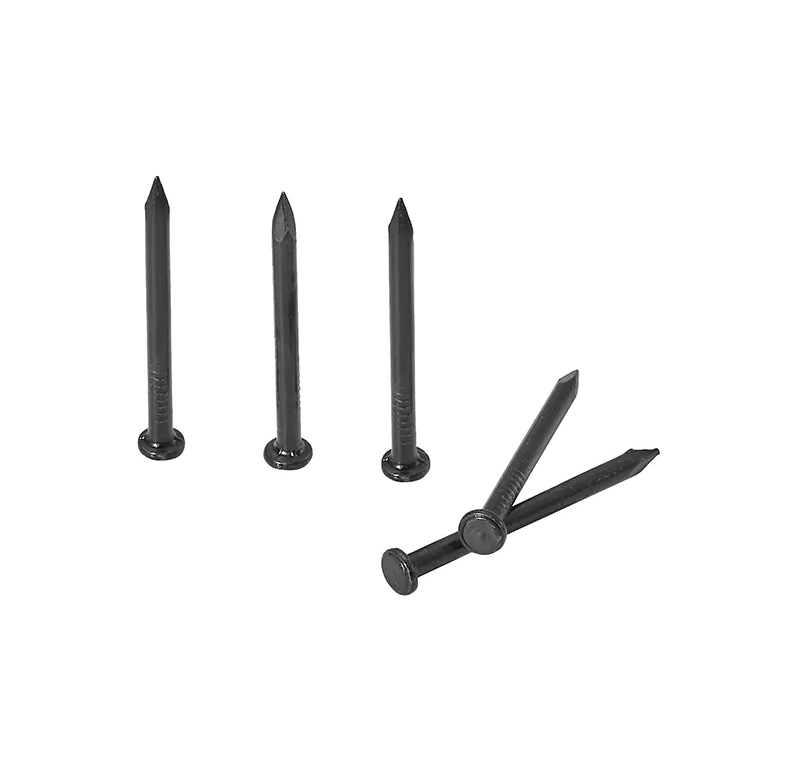
They are not the part of a structure people notice. Still, they influence how materials sit, how surfaces align, and how steady a build feels during installation. Because of this, construction projects often rely not just on the product itself, but on the stability behind its production.
A Concrete Nails Factory producing concrete nails is not only a supply point. It becomes part of the rhythm of construction work.
What role do concrete nails actually play on site?
Concrete nails are used where ordinary fastening methods are not enough. Hard surfaces, dense materials, and fixed structures all require something that can hold position without shifting.
On site, their function is straightforward. Fix. Hold. Support. But the real value appears in repetition. Thousands of nails may be used in a single project, often under similar conditions.
When each piece behaves the same way, workers move with confidence. When small differences appear, adjustments begin to accumulate. That is where time is lost, not in large failures, but in repeated small corrections.
Why does factory stability matter more than product appearance?
To someone outside the industry, most concrete nails look identical. The differences are not easy to see. Shape, length, and surface may appear consistent at first glance.
Inside construction work, appearance matters less than behavior.
A stable factory focuses on repeatable outcomes. The goal is not only to produce nails that meet a basic form, but to ensure each batch behaves in the same way during real use.
Unstable production can still produce visually similar items, yet their performance may shift slightly. These shifts are often subtle. They appear during installation or after repeated use on site.
How do factory differences show up in real construction use?
This is where differences become practical rather than theoretical. On paper, two suppliers may look similar. On site, their products may not behave the same way.
The table below shows how these differences are often perceived in real working conditions:
| Factory Stability Level | On-Site Behavior | Worker Experience | Project Impact |
|---|---|---|---|
| Stable production flow | Consistent installation feel | Smooth and predictable handling | Fewer adjustments needed |
| Slight variation in batches | Small differences in resistance | Occasional correction required | Mild slowdown in workflow |
| Unstable output control | Noticeable inconsistency | Frequent adaptation needed | Repeated delays and rework |
This comparison is not about technical measurement. It reflects how construction teams describe real working experience when materials behave differently across batches.
How does raw material handling shape the final outcome?
Before any forming begins, materials already carry variation. Even when they come from similar sources, their behavior can change during processing.
This stage is often invisible to the end user, but it sets the tone for everything that follows.
A stable factory treats raw material handling as part of quality control, not just storage. Materials are kept under controlled conditions. Movement is organized. Mixing between batches is reduced.
Small differences here can grow later. A slight shift in preparation may affect how the nail responds during installation or how stable it remains under pressure.
What makes production flow so important in consistency?
Production is not only about machines working. It is about how smoothly each stage connects to the next.
When flow is stable, material moves through the system in a predictable rhythm. Each step supports the next without interruption or unnecessary adjustment.
In less controlled environments, small gaps appear between stages. A delay here, a mismatch there. These do not always stop production, but they introduce slight variation.
Over time, that variation becomes visible in the final product.
How do factories maintain similarity across different batches?
Construction projects rarely depend on a single shipment. Materials arrive over time, sometimes in phases that span long periods.
This makes batch consistency important. A nail delivered today should behave like one delivered weeks earlier.
Factories manage this through structured routines. Production steps follow a repeatable pattern. Workers rely on established sequences rather than changing methods frequently.
There is also ongoing observation. Small differences in behavior are noticed early and corrected before they spread.
Consistency is not a single action. It is a habit repeated across every cycle of work.
Why do construction teams quickly notice supplier differences?
From the outside, concrete nails seem interchangeable. But on site, differences show up quickly.
Some nails move into material smoothly. Others require more effort. Some remain stable after installation. Others may feel slightly less secure under repeated use.
These differences may not appear in controlled conditions, but they become visible during real work.
Construction teams often do not describe this in technical language. They talk about "smooth work" or "rough batches."
Over time, experience builds a clear sense of which suppliers behave consistently and which do not.
What is the link between factory discipline and site efficiency?
Factory discipline is about structure, repetition, and predictable behavior in production.
When a Concrete Nails Supplier operates with stable discipline, the output becomes easier to trust. That trust carries directly into construction work.
On site, efficiency depends on rhythm. Workers expect materials to respond in a certain way. When that expectation is met, work flows naturally.
When it is not, even experienced teams need to pause and adjust.
So efficiency on site is not only a result of skill. It is also shaped by how stable the incoming materials are.
How does packaging influence real-world usability?
After production, materials still have a journey before reaching the site. Packaging plays a role in keeping that journey controlled.
Well-structured packaging helps reduce movement and surface damage during transport. It also makes handling easier once materials arrive.
Storage conditions between production and use can also influence stability. Even finished products benefit from controlled environments.
When packaging and storage are handled carefully, the product reaches the site in a more predictable state.
Why does supply stability affect long project timelines?
Construction work is rarely completed in one step. It moves in stages, often over extended periods.
This makes supply continuity important. If each delivery behaves differently, adjustments must be made repeatedly during the project.
A stable factory reduces that uncertainty. Each supply batch aligns with the previous one, allowing work to continue without shifting methods or expectations.
Without that stability, planning becomes more complex. Teams may need to recheck compatibility or adjust workflows mid-process.
How do real conditions reveal differences between factories?
Controlled testing can show basic strength and shape. Real environments show behavior under variation.
On construction sites, conditions change constantly. Temperature, surface type, handling methods, and timing all vary.
In these conditions, differences between factories become more visible over repeated use.
Some nails maintain steady performance across different situations. Others behave differently depending on conditions or batch variation.
Over time, construction teams form practical judgments based on how materials perform in real work, not just how they appear in specification sheets.

 Quick Links
