


 English
 русский
 中文简体
中文简体 عربى
عربى
Concrete nails are small parts with a clear role. They connect materials to hard surfaces where ordinary fasteners may bend or fail. In many building environments, the choice of nail affects both the speed of work and the stability of the final structure.
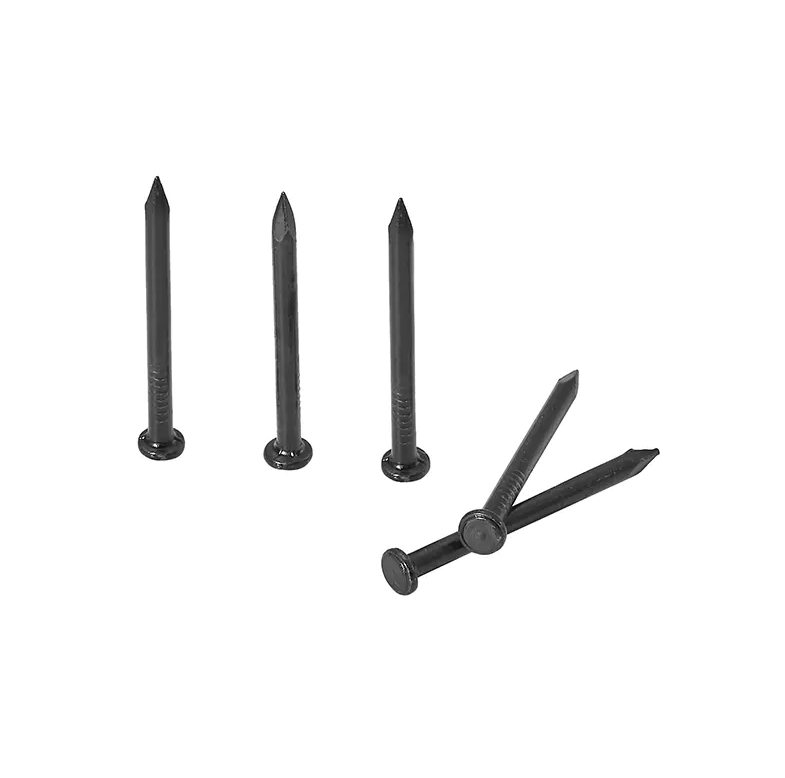
China has become an active supply source for concrete nails. Production covers a wide range of shapes and surface styles. These variations are not random. Each type responds to a different material condition or installation need.
We are looks at common types of China concrete nails and how they are used across different building materials. The focus stays on practical use rather than theory.
What defines a concrete nail in modern construction?
A concrete nail is designed for use on hard substrates such as concrete, brick, and block. It differs from general nails in strength and structure.
The nail must enter a dense surface without bending. At the same time, it should remain fixed after insertion. This creates a balance between hardness and grip.
In many projects, workers do not treat all concrete nails the same. The selection depends on the surface condition, the attached material, and the working method.
What types of China concrete nails are commonly used?
Concrete nails from China are often grouped by structure and surface style. Each group serves a different role during installation.
Below is a simple table that outlines common types and their typical use directions.
| Nail Type | Surface Feature | Common Use Direction |
|---|---|---|
| Smooth Shank Nail | Straight body | Light fixing on firm surfaces |
| Fluted Shank Nail | Grooved body | Strong grip in dense material |
| Spiral Shank Nail | Twisted body | Increased holding force |
| Square Concrete Nail | Angular shape | Better resistance to rotation |
| T Head Concrete Nail | Flat head | Surface fixing where head contact matters |
| U Shaped Concrete Nail | Dual prong | Fixing wire or mesh |
Each type reflects a different balance between penetration and holding force.
How do different nail structures affect performance?
Every nail's design changes how it works when you drive it into materials.
Nails with plain smooth shafts slide in easily with little pushback. They work fine for light jobs that don't need super strong holding power.
Nails with ridges or grooves create more friction once hammered home. They won't pull loose easily, perfect for spots exposed to constant shaking or shifting.
Spiral-shank nails twist a little as you drive them in. This twist locks them tighter without you needing to hit extra hard.
Square shanks stop the whole fastener from spinning. That's ideal for securing materials that might twist or move after installation.
People pick nail styles based entirely on what kind of base material they're fastening onto.
How are concrete nails used on solid concrete surfaces?
Solid concrete is one of the most challenging materials for fastening.
In this case, nails with stronger grip structures are often used. Fluted and spiral designs perform well because they resist pull-out after insertion.
Surface condition also matters. New concrete behaves differently from aged concrete. Small cracks or surface variation can influence how the nail enters.
Workers may select nail types based on whether the goal is temporary fixing or long-term attachment.
In some cases, pre-drilling may be used. In others, direct driving is preferred for speed.
How do concrete nails perform in brick and block materials?
Brick and block materials have internal variation. They are hard, but not always uniform.
In these materials, the nail must adapt to slight changes in density.
Smooth shank nails can work for lighter attachments. However, for more stable fixing, fluted or spiral nails are often chosen.
The goal is to create enough grip without damaging the surrounding structure.
Some applications include:
- fixing wooden strips to brick walls
- attaching panels to block surfaces
- securing light fixtures
Each case may require a slightly different nail choice.
What role do concrete nails play in wood-to-concrete connections?
One common use of concrete nails is fixing wood onto hard surfaces.
This type of connection appears in framing, temporary supports, or surface finishing work.
The nail must pass through the wood and anchor into the concrete base.
In this situation, the nail must maintain alignment during driving. If it bends inside the wood layer, the connection becomes weak.
Fluted or spiral nails often provide better holding force in these cases.
The thickness of the wood layer may also influence the nail type selection.
How are concrete nails used in metal and mesh installation?
Concrete nails are not limited to wood connections. They are also used to fix metal elements.
Examples include:
- wire mesh
- thin metal sheets
- brackets or clips
For these uses, head shape becomes important.
A flat or wider head helps hold the material in place without slipping.
U-shaped nails are often used for wire or cable fixing. They hold the material from two sides, reducing movement.
The goal in these cases is not only strength but also stability of position.
How does surface treatment influence nail behavior?
Surface treatment changes how the nail interacts with its environment.
Some nails have a coated surface. This can reduce friction during insertion or provide basic resistance to environmental exposure.
Other nails remain untreated and rely on their structural design for performance.
In outdoor or humid environments, surface condition becomes more important. It may influence long-term durability.
However, the choice is not always based on environment alone. It also depends on how the nail will be used during installation.
What factors influence nail selection in different building materials?
Choosing the right concrete nail is not a random step.
Several practical factors influence the decision:
Surface hardness
Harder surfaces require stronger and more stable nail structures.
Material thickness
The attached material affects how the nail behaves during driving.
Holding requirement
Some applications need stronger grip than others.
Installation method
Manual or tool-assisted installation can influence nail choice.
Environmental condition
Exposure to moisture or temperature variation may affect long-term performance.
These factors often work together rather than separately.
How does installation method affect nail performance?
The way a nail is installed can change its final behavior.
Manual hammering allows more control but may reduce speed.
Tool-assisted methods increase efficiency but require consistent nail quality.
During installation, alignment is important. A slight angle change can affect how the nail enters the surface.
In harder materials, repeated impact may be needed. This places stress on both the nail and the surrounding area.
Because of this, the nail must balance strength with a certain level of flexibility.
Why do construction teams adjust nail types across projects?
Different projects present different surface conditions.
A nail that works well in one environment may not perform the same way in another.
Construction teams often adjust their selection based on experience.
For example, a smoother surface may allow easier penetration. A rough or aged surface may require a stronger grip design.
The goal is to match the nail to the working condition rather than using a single type for all situations.
How do China concrete nails support flexible construction needs?
China concrete nails are produced in a wide variety of forms.
This range allows buyers to choose based on application rather than adapting the application to the product.
Flexible supply also supports different project scales.
Small repair work and large construction tasks may both use concrete nails, but the requirements are not identical.
Having multiple options helps reduce mismatch between tool and task.
What changes are shaping the use of concrete nails today?
Construction practices continue to shift.
There is more attention on efficiency, repeatability, and ease of use.
This affects how fastening tools are selected.
Concrete nails remain a simple solution, but their design continues to adjust to new working styles.
Some projects prefer faster installation. Others focus on stable long-term attachment.
These differences influence how nail types are used across materials and environments.
How do material combinations influence fastening choices?
Modern construction rarely uses a single material.
Concrete, wood, metal, and composite materials often appear together in one structure.
This creates mixed conditions for fastening.
A nail must pass through one material and anchor into another.
This interaction changes how the nail behaves.
For example:
- wood to concrete requires penetration and grip
- metal to brick requires head stability
- mesh to block requires holding from both sides
Each combination creates a slightly different requirement.
What should be considered when working on renovation projects?
Renovation work presents a different set of challenges.
Existing surfaces may not be uniform. There may be hidden variation under the visible layer.
In such cases, flexible nail selection becomes important.
Workers may test different types before settling on one.
Grip strength, penetration ease, and surface response all play a role.
Older materials may respond differently compared to new construction surfaces.
How do small design differences influence large project outcomes?
Concrete nails are small components, but they appear in large numbers.
A small change in design can influence installation speed or holding performance.
Across a large project, this can affect overall workflow.
For example, easier penetration may reduce installation time.
Better grip may reduce the need for rework.
These small changes accumulate over many repeated actions.
Why does material compatibility matter in fastening?
Material compatibility is often overlooked.
Some nails work better with certain materials because of how they interact during insertion.
A mismatch can lead to bending, cracking, or weak holding.
Understanding the relationship between nail structure and base material helps reduce these risks.
It also supports more stable and predictable installation results.
How do construction habits influence nail selection?
Different teams develop their own working habits.
Some prefer nails that are easier to drive. Others focus on stronger holding force.
These preferences often come from past project experience.
Over time, teams build a practical understanding of which types work in certain conditions.
This knowledge shapes future material selection decisions.
What role does consistency play in fastening performance?
Consistency is important in any repeated process.
Using the same nail type across similar conditions helps maintain uniform results.
Variation in nail type may lead to variation in performance.
In large projects, consistency helps reduce uncertainty.
It also supports smoother workflow during installation.
How do concrete nails fit into modern building practices?
Modern building practices focus on coordination between materials.
Fastening is one part of this coordination.
Concrete nails remain relevant because they provide a direct and simple method of fixing materials to hard surfaces.
They do not require complex preparation.
At the same time, their performance depends on correct selection and use.
Different nail types support different needs across materials.
This allows construction teams to adjust their approach based on real working conditions rather than fixed assumptions.

 Quick Links
