


 English
 русский
 中文简体
中文简体 عربى
عربى
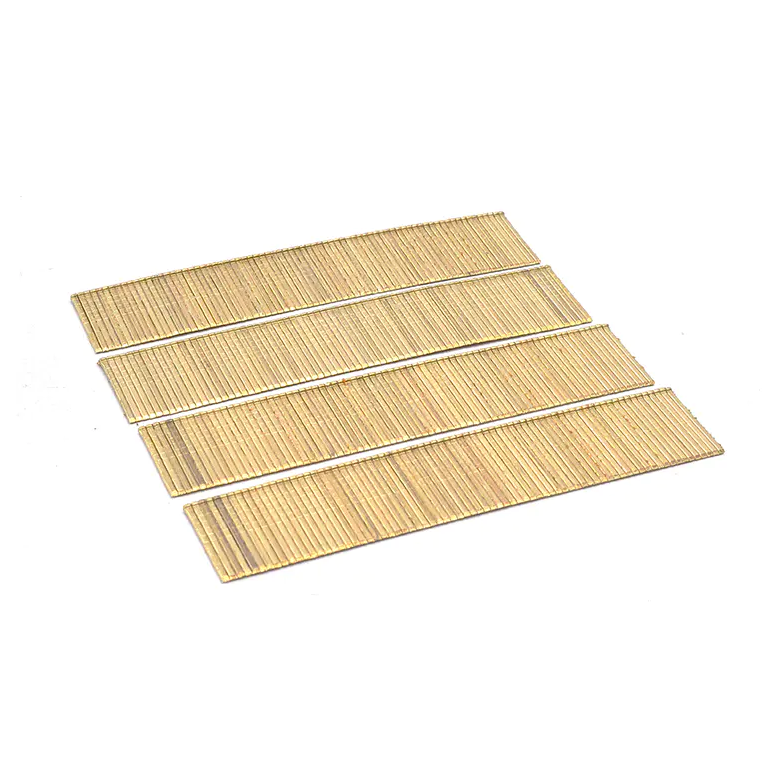
F series brad nails are often treated as small, routine items in workshops. They come in compact strips, easy to carry, easy to use, and easy to overlook. In daily work, more attention usually goes to tools and materials, while fasteners sit quietly in the background.
Yet when something goes wrong, they are often part of the reason.
A strip that no longer feeds smoothly. A slight bend that was not noticed at first. A surface mark that appears during finishing work. These issues rarely come from manufacturing alone. They are often linked to how the nails were stored or handled earlier.
Looking after brad nails is not complicated. It is more about habits than systems.
Why does storage condition affect brad nails more than expected?
At a glance, metal fasteners seem resistant to change. They are solid, uniform, and designed to hold materials together. It is easy to assume they can be placed anywhere without consequence.
In reality, their condition is more sensitive than it appears.
F series brad nails are arranged in strips. This structure helps them feed smoothly into tools. When that alignment is disturbed, even slightly, performance changes.
Environmental exposure also plays a quiet role. Moisture in the air, dust settling between strips, or repeated contact with other objects can gradually affect their surface and shape.
These changes are often slow. They do not show up immediately. They reveal themselves later, usually during application.
What kind of storage environment works in practice?
A suitable environment does not need to be complicated. What matters is stability.
A dry and clean area is usually enough. Direct exposure to moisture should be avoided. Sudden shifts in temperature are also not ideal, especially in spaces where materials expand or contract.
Open shelves can work, but enclosed cabinets offer better protection against dust and air movement.
It also helps to keep fasteners away from areas where liquids are used frequently. Finishing materials, cleaning fluids, or adhesives may not directly damage the nails, but accidental contact can affect their surface.
In many workshops, a simple corner with consistent conditions becomes the reliable storage space.
How should brad nails be stored day to day?
In practice, simple organization works better than complex systems.
Keeping nails in their original packaging is often the easiest solution. Packaging is designed to hold strips in place and reduce movement.
Once opened, partial strips need a bit more care. Leaving them loose on a surface increases the chance of bending or mixing with other sizes.
Some workers prefer using small containers or divided boxes. This makes it easier to separate different nail types and avoid confusion during work.
The main ideas are easy to follow:
- avoid stacking items loosely
- prevent pressure from heavier objects
- keep different sizes clearly separated
These habits take little time but help maintain consistency.
How does handling influence performance during use?
Handling is often where small problems begin.
Brad nails are lightweight. That makes them easy to move, but also easier to misalign if handled roughly.
Dropping a strip onto a hard surface may not seem serious, but it can affect alignment. Bending is sometimes too slight to notice until the nail is used.
Frequent touching can also introduce dust or residue onto the surface. This may not always be visible, but it can influence how nails behave when driven into materials.
Careful handling does not mean slow work. It simply means avoiding unnecessary force and repeated movement.
What are common mistakes seen in workshops?
In busy environments, speed often takes priority. That is where small oversights appear.
Some of the more common situations include:
Nail strips left open on a workbench for extended periods. Over time, dust settles and strips may shift.
Different nail types mixed together in one container. This creates confusion and increases handling.
Heavy tools placed on top of stored nails. Pressure may affect alignment without obvious signs.
Loose carrying between work areas without any form of protection.
These actions do not always cause immediate issues, but they build up over time.
How can nails be organized for smoother workflow?
Good organization supports both storage and handling.
A clear system reduces the need to search, sort, and re-handle materials during work.
Some workshops arrange nails by size or application. Labels or simple markings help identify contents quickly.
Frequently used items are placed within easy reach. Less common items are stored separately to avoid unnecessary contact.
This reduces movement, which in turn reduces the chance of damage.
How does transportation affect nail condition?
Movement between storage and work areas is often overlooked.
Even short distances can affect nail strips if they are carried loosely. Contact with other objects may cause shifting or slight bending.
Using small containers or trays can help keep strips stable. It is also useful to avoid placing too many items together, as pressure can build up during transport.
In mobile work situations, this becomes even more important. Materials are handled more frequently, and conditions are less controlled.
What happens when storage and handling are not consistent?
The effects are usually seen during use rather than during storage.
Nails may not feed smoothly into tools. This interrupts workflow and requires adjustment.
Surface marks may appear in finished work, especially in visible areas.
In some cases, nails may not hold as expected due to slight deformation.
These outcomes are rarely traced back immediately to storage or handling, but the connection becomes clear over time.
A simple comparison of different approaches
| Storage and Handling Approach | Condition Over Time | Behavior During Use | Workflow Impact |
|---|---|---|---|
| Organized and protected | Stable and consistent | Smooth feeding | Steady workflow |
| Mixed and loosely stored | Gradual misalignment | Occasional interruptions | Slower progress |
| Rough handling and pressure | Visible changes in strips | Feeding issues | Frequent adjustment |
This comparison reflects what is often observed in daily work rather than strict rules.
How do different work environments shape these habits?
Workshop layouts differ a lot from one place to another. Some run as compact small workshops, others connect into full-scale automated production lines.
For those cramped small workshops, there's no fixed storage setup. Raw materials get shifted around frequently, and tools and spare supplies end up sharing the same limited workspace.
Big-scale production workshops follow strict storage rules. Zones are split up specifically for different goods to keep the site tidy and cut down unnecessary moving work.
Jobs involving frequent on-site moving bring extra requirements. All fastener stock needs to be easy to carry while staying shielded from damage.
Every working space ends up forming its own routine for storing and arranging fasteners.
Why do small habits make a noticeable difference?
There is no need for complicated systems.
Simple actions repeated over time are enough to maintain good condition.
Returning nails to their container after use. Avoiding unnecessary movement. Keeping storage areas clean.
These habits reduce the chance of small issues building up.
Over time, they support a smoother workflow without adding extra effort.
How does awareness improve handling over time?
Workers get better at handling materials simply through long-term on-the-job experience.
After running into feeding jams, surface scratches and other similar problems multiple times, staff can gradually spot recurring issues. They learn to link these common faults back to improper handling and storage habits in the early stages of operation.
With this hands-on awareness, workers will actively adjust their daily operating habits little by little.
They handle materials more gently to avoid damage, pay closer attention to where and how they store supplies, and stop mixing different materials in the same containers.
These improvements are not enforced by rules. They form naturally as workers observe problems and accumulate practical experience on the job.
How does this connect to overall work quality?
Fasteners may be small, but they influence the final result.
When nails are in good condition, tools work smoothly and results are consistent.
When issues appear, time is spent adjusting, correcting, or repeating tasks.
This connection is easy to overlook because fasteners are simple items. Still, they play a steady role in the background of every project.
Why is this an ongoing process rather than a one-time setup?
Storage and handling are not fixed tasks. They change with the workflow.
Materials are used, replaced, moved, and exposed to different conditions.
Maintaining consistency means paying attention over time, not just setting up once.
It is a balance between convenience and care.
In cases, small adjustments in daily habits are enough to keep things running smoothly.

 Quick Links
