


 English
 русский
 中文简体
中文简体 عربى
عربى
Most people focus on big machines and finished goods when talking about construction, furniture making or packaging. Tiny fasteners rarely get noticed, yet nearly all assembly work relies on these small pieces to hold materials firmly together.
Heavy duty wire staples fall into this category of useful fasteners. They work well for jobs where regular staples lack enough strength. They are widely used across various industries, ideal for projects that need tight bonding while keeping a tidy surface.
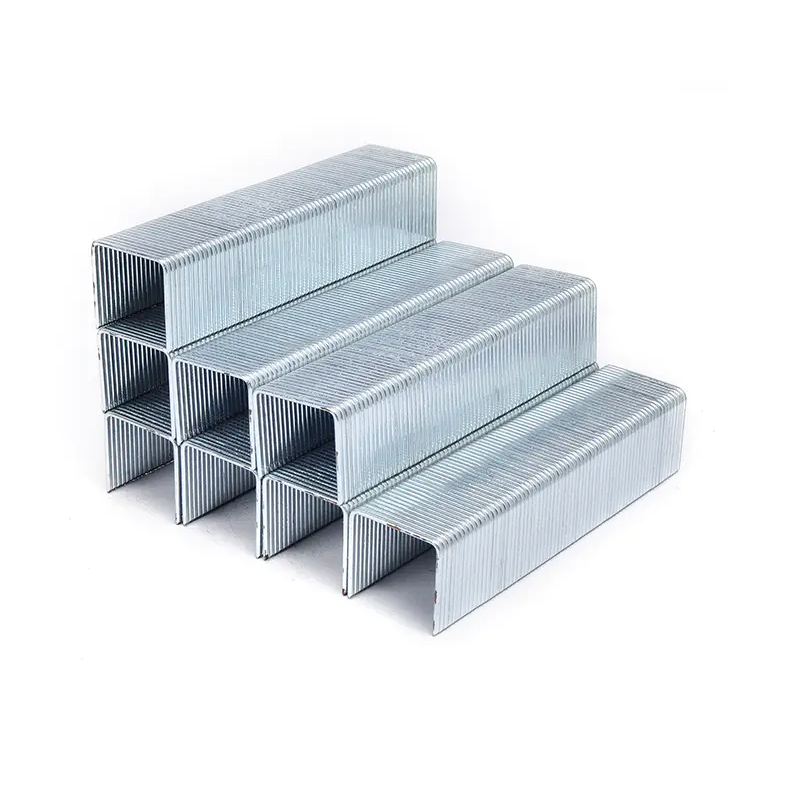
These staples are a common staple in small workshops and large factory production lines alike. Learning about their actual uses helps buyers pick the right staple type to fit their specific work tasks.
Why are Heavy Duty Wire Staples used in many industries?
Different industries have different fastening needs. A furniture maker may want a clean connection between materials. A packaging company may need a secure way to hold materials together during handling.
Heavy Duty Wire Staples are designed for these types of situations. They are often selected when users need a stronger fastening option that can work with various materials.
Their applications are not limited to one field. Common areas include:
| Industry | Typical Use |
|---|---|
| Woodworking | Attaching materials and supporting assembly work |
| Furniture Production | Fixing fabrics, panels, and related components |
| Construction | Securing certain materials during installation |
| Packaging | Holding materials together during storage or transport |
The reason these staples remain widely used is simple. Many projects need a fastening method that is practical, easy to apply, and suitable for repeated work.
How do Heavy Duty Wire Staples work in woodworking projects?
Woodworking is one of the areas where these fasteners are commonly found. Furniture production and handmade projects often involve connecting different materials together.
For example, when fabric needs to be attached to a wooden frame, a suitable staple can create a cleaner connection compared with larger fastening options. In decorative projects, keeping the surface appearance neat is often an important consideration.
Woodworkers may use these staples for:
- Furniture assembly
- Attaching upholstery materials
- Fixing decorative parts
- Supporting small woodworking projects
The choice of staple depends on the material combination. Different types of wood, fabrics, and other materials may require different fastening approaches.
This is why experienced users usually look at the whole project instead of choosing a product only by appearance.
Where are Heavy Duty Wire Staples used in construction work?
Construction sites use all kinds of building materials. When fitting parts together, crews need fasteners strong enough to hold pieces steady without slowing down their work pace.
Heavy duty wire staples work well for securing materials, temporary mounting and all sorts of interior finishing jobs on site.
Common construction tasks that use these staples include:
- Fastening various building boards and panels
- Fixing protective sheets and barrier coverings
- Installing thermal and sound insulation layers
- Completing trim and interior surface finishing
Small fasteners can greatly affect how smoothly construction goes. Picking staples that fit the job makes installation faster and cuts down extra rework or tweaks later.
Which staple type to use always comes down to what each building project needs. Different site conditions call for different fastening solutions.
Can Heavy Duty Wire Staples be used for packaging purposes?
Staples are a must-have for packing work.
All packages need to hold their shape through transport and storage. Loose wrappings or crate frames create headaches when handling goods, and sturdy staples lock every part of the packaging in place.
Heavy duty wire staples handle these everyday packing jobs:
- Sealing thick, heavy packing sheets
- Fixing wooden shipping crate frames
- Securing protective cushioning inside packages
- Putting together finished product packaging before delivery
For most businesses, packaging matters for more than just appearance. It directly speeds up packing and shipping work. Picking the correct staples makes the whole packing process much easier for staff.
Supply chains keep expanding year after year, so companies now value solid, hassle-free packing solutions. This pushes demand for long-lasting heavy duty staples higher.
What materials are available for Heavy Duty Wire Staples?
Material choice influences how a staple performs in different situations. Manufacturers usually consider the intended use before selecting materials.
Common options include:
| Material Type | General Features |
|---|---|
| Steel | Common choice for many fastening applications |
| Coated Steel | Provides additional surface protection |
| Stainless Material | Used when appearance or environmental conditions require attention |
Steel-based materials are widely used because they fit many everyday applications.
Coated options may be selected when users want additional surface care. They can be suitable for projects where the appearance of the fastener matters.
Some applications may require materials that match special environments. In these cases, buyers often discuss their needs with suppliers before making a decision.
How can buyers select the right Heavy Duty Wire Staples?
Choosing fastening products is not only about finding a strong option. The application itself plays a major role.
Before purchasing, buyers often review several questions:
- What material needs to be connected?
- Where will the staples be used?
- How often will the fastening process happen?
- What type of equipment will be used?
A simple selection guide:
| Question | Reason |
|---|---|
| What is the application? | Different projects have different needs |
| What materials are involved? | Material combinations affect the choice |
| What is the working environment? | Conditions may influence material selection |
| Who supplies the product? | Supplier experience can affect purchasing decisions |
Taking time to understand these factors can reduce mistakes and make future work easier.
Why do manufacturers pay attention to Heavy Duty Wire Staples production?
These staples look simple, yet making them well demands strict production standards. Tiny flaws will weaken their performance when put to real work.
Producers keep a close eye on four core parts of production:
- Raw material quality checks
- Uniform size and strength across every batch
- Smooth finished surface free of burrs
- Neat, intact bulk packaging for delivery
Factories that order staples in large volumes count on steady, uninterrupted stock above many other factors.
Good staple makers also learn the different ways clients use their goods. Staples for furniture assembly carry different strength standards than those meant for packing or building sites.
By linking production standards to actual on-site usage, manufacturers can build staples that fit what buyers really need day to day.
How are Heavy Duty Wire Staples changing with customer expectations?
The fastening market continues to change as industries look for more practical solutions.
Customers are no longer only asking whether a product can complete a task. They also want to understand whether it fits their working environment and production habits.
This has encouraged suppliers to offer more detailed product information and more flexible choices.
Different industries continue to create new demands. Woodworking companies may focus on appearance. Construction users may focus on application convenience. Packaging businesses may care about handling efficiency.
Because of these differences, Heavy Duty Wire Staples remain a product category that requires attention to material selection, application knowledge, and supplier communication.

 Quick Links
