


 English
 русский
 中文简体
中文简体 عربى
عربى
Walk through any furniture workshop or interior finishing job site, and you'll find that a lot of what actually holds things together disappears from view once the piece is done. Nobody looks twice at a small nail, but that tiny piece of hardware can be the difference between a joint that assembles cleanly and one that leaves a rough surface behind after installation. That's part of why craftsmen and manufacturers spend real time thinking through which fastener suits which material—it's rarely a random choice.
F30 Brad Nails have earned their place in a lot of woodworking shops, especially where the finished surface needs to look clean and uninterrupted. They show up constantly in furniture components, decorative trim, cabinetry, and interior wood pieces—basically anywhere a slim profile matters. Because they're so thin, they can hold smaller pieces in place without leaving those larger, obvious marks that bulkier fasteners tend to create.
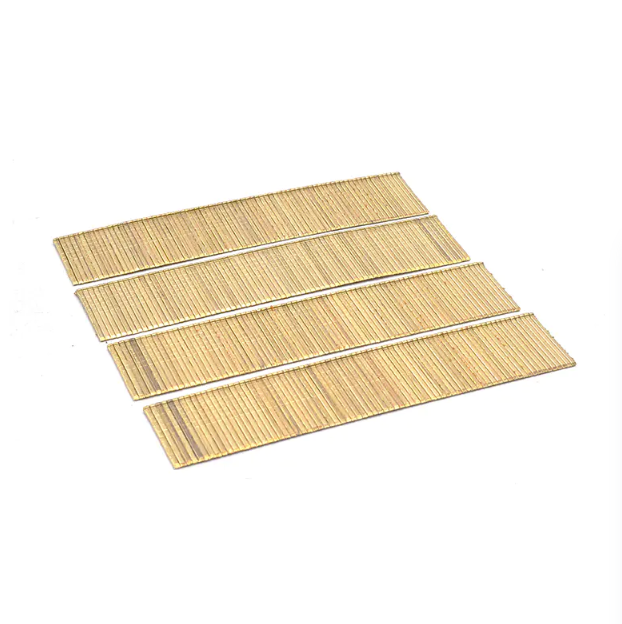
That said, materials don't all behave the same way once a nail meets the surface. Solid wood, engineered panels, and decorative materials each respond differently during fastening, and pretending otherwise leads to problems down the line. Getting a real sense of how brad nail f30 interact with these different materials makes it a lot easier to pick the right option, whether the job is production work or on-site installation.
This kind of material compatibility ends up mattering quite a bit—not just for furniture manufacturers, but for construction contractors and hardware buyers too, since picking the wrong fastener rarely announces itself until it's already too late to fix easily.
Why Are F30 Brad Nails Popular in Woodworking Applications?
Woodworking remains one of the common areas where F30 Brad Nails are used. Many projects require fasteners that can hold parts together while keeping the finished appearance clean.
Large nails or heavy-duty fasteners may provide strong connections for certain applications, but they can leave noticeable marks on visible surfaces. In furniture and decorative projects, appearance is often an important consideration.
F30 Brad Nails are commonly selected for tasks such as:
| Application | Common Material Use |
|---|---|
| Furniture assembly | Wood frames, small wooden parts |
| Cabinet production | Panels, trims, decorative components |
| Interior decoration | Molding, wooden strips, finishing pieces |
| DIY woodworking | Small crafts and repair projects |
The use of these nails is closely connected with the characteristics of the material. Lightweight wooden parts usually require a different fastening approach compared with large structural components.
Many woodworking professionals choose brad nails because they balance practical installation with a cleaner finished surface.
Which Wooden Materials Work Well With F30 Brad Nails?
Wood is the main material associated with F30 Brad Nails. However, different types of wood have different textures, densities, and applications.
Solid Wood
Solid wood is commonly found in furniture, decorative products, and interior projects. F30 Brad Nails can be suitable for attaching smaller wooden parts, especially when the project requires a smooth appearance.
Common uses include:
- Decorative frames
- Wooden trims
- Small furniture components
- Cabinet details
- Interior wood accessories
Craftsmen often consider the type of wood before selecting a fastener. Softer wood materials may accept nails more easily, while harder wood may require more attention during installation.
The purpose of the project also matters. A decorative connection and a load-bearing connection usually have different requirements.
Plywood
Plywood is another material often used in furniture manufacturing and interior applications. It has a layered structure and is commonly used for cabinets, shelves, and panels.
F30 Brad Nails may be used for:
- Attaching decorative parts
- Fixing lightweight panels
- Supporting small assembly tasks
- Connecting furniture components
Many furniture producers combine plywood with other materials. In these cases, the fastening method needs to match the overall product design.
MDF and Engineered Wood
Engineered wood materials are widely used in modern furniture production. They provide a smooth surface and are commonly found in cabinets, storage products, and decorative furniture.
These materials can work with F30 Brad Nails in suitable applications, especially where small components need to be attached.
Manufacturers usually evaluate:
- Material thickness
- Product structure
- Intended use
- Surface appearance requirements
Choosing the correct fastener helps reduce unnecessary surface damage during production.
Can F30 Brad Nails Be Used for Furniture Manufacturing?
Furniture production is where F30 Brad Nails really earn their keep. Modern furniture pieces are full of small components, and getting all those parts assembled accurately isn't something that happens by accident.
Walk into a cabinet shop, furniture factory, or woodworking workshop, and you'll likely find these nails doing work on things like decorative panels, wooden edging, cabinet detailing, frame joints, and other small interior components that need to be held in place without drawing attention to themselves.
In furniture manufacturing, speed and looks tend to matter equally. Workers need a fastening method that lets assembly move quickly, but that doesn't come at the cost of how the finished piece actually looks.
Say a cabinet door has some decorative strips or small wooden accents built into it—choosing the right fastening approach means those pieces stay secure without throwing off the design the customer actually sees.
There's also the matter of consistency across production runs. Once a factory starts assembling hundreds, or even thousands, of nearly identical products, having fastening performance that doesn't waver from one unit to the next becomes less of a nice-to-have and more of a core part of running the operation smoothly.
What Decorative Materials Can Be Fixed With F30 Brad Nails?
Interior decoration is another area where F30 Brad Nails are frequently considered. Decorative projects often focus on details, and visible marks from large fasteners can affect the final appearance.
Common decorative materials include:
- Wooden molding
- Trim pieces
- Wall decoration elements
- Picture frames
- Decorative panels
Many interior contractors prefer fastening solutions that leave less noticeable marks. This allows surfaces to maintain a cleaner look after installation.
In residential and commercial interiors, decorative elements are often used to create visual effects. Whether it is a wooden frame around a wall feature or a trim piece near a ceiling, the fastening method needs to support both function and appearance.
This is why slim brad nails continue to be used in many finishing projects.
Are F30 Brad Nails Suitable for All Wood-Based Materials?
Although F30 Brad Nails are useful for many woodworking applications, they are not suitable for every material or every project.
Materials that may require other fastening methods include:
| Material | Reason |
|---|---|
| Heavy metal parts | Requires different fixing methods |
| Concrete surfaces | Needs specialized installation solutions |
| Large structural components | May require stronger support |
| Extremely hard materials | May affect fastening performance |
The purpose of the project should always be considered before selecting nails.
A decorative wooden strip and a heavy furniture frame have different requirements. Using the correct product for the right application helps improve installation quality.
Professional users usually evaluate the entire project instead of focusing only on the nail itself. Material type, working conditions, and final appearance all influence the decision.
How Do Woodworking Professionals Choose the Right F30 Brad Nails?
Choosing a suitable brad nail is not only about selecting a product name. Woodworkers usually consider several practical factors before starting a project.
Important points include:
| Consideration | Why It Matters |
|---|---|
| Material type | Different materials require different fastening approaches |
| Project purpose | Decorative and functional applications have different needs |
| Surface appearance | Visible areas may require cleaner finishes |
| Tool compatibility | The nail should match the fastening equipment |
| Supply availability | Regular projects need stable product sources |
For professional workshops, reliable supply is also important. Production schedules often depend on having the right materials available at the right time.
Hardware distributors and international buyers may also look at supplier experience, product range, and communication ability when selecting a manufacturing partner.
Why Do Cabinet and Interior Suppliers Prefer F30 Brad Nails?
Cabinet and interior suppliers often work with materials that require detailed finishing. Customers usually expect furniture and interior products to have a clean appearance.
During cabinet production, F30 Brad Nails may be used for:
- Decorative trims
- Small wooden attachments
- Back panels
- Internal components
- Finishing parts
These applications usually do not require large visible fasteners. A smaller fastening solution can help maintain the design quality of the product.
Interior suppliers also need products that support efficient installation. When working on multiple projects, easy handling and consistent supply become valuable advantages.
For this reason, F30 Brad Nails remain a common choice among professionals working with wood-based products.
What Should Buyers Know When Sourcing F30 Brad Nails?
For buyers purchasing F30 Brad Nails in larger quantities, supplier selection is an important part of the process.
Importers, wholesalers, and distributors often consider:
- Manufacturing experience
- Product consistency
- Packaging options
- Delivery capability
- Customer support
A supplier that understands different applications can provide better recommendations based on customer needs.
For example, a furniture manufacturer may focus on regular supply for production, while a hardware distributor may need products suitable for different customer groups.
Good communication between buyers and suppliers helps avoid problems related to material compatibility or application requirements.
How Are F30 Brad Nails Supporting Modern Woodworking Trends?
Furniture design and interior decoration continue to change. More manufacturers are focusing on clean designs, efficient production, and practical assembly methods.
Small fastening products remain important because they support many detailed manufacturing steps.
F30 Brad Nails are commonly associated with:
- Furniture production
- Cabinet assembly
- Decorative woodworking
- Interior finishing
- Small wood projects
Their role is not only about joining materials. They also influence production efficiency and the appearance of finished products.
As woodworking industries continue to develop, understanding the connection between fasteners and materials will help manufacturers, contractors, and buyers make more suitable choices for different applications.

 Quick Links
