


 English
 русский
 中文简体
中文简体 عربى
عربى
Drywall screws may look like simple construction fasteners, but their role in building work makes manufacturing consistency important. They are used in many interior construction tasks, where installers expect the screws to work smoothly with the materials and tools involved.
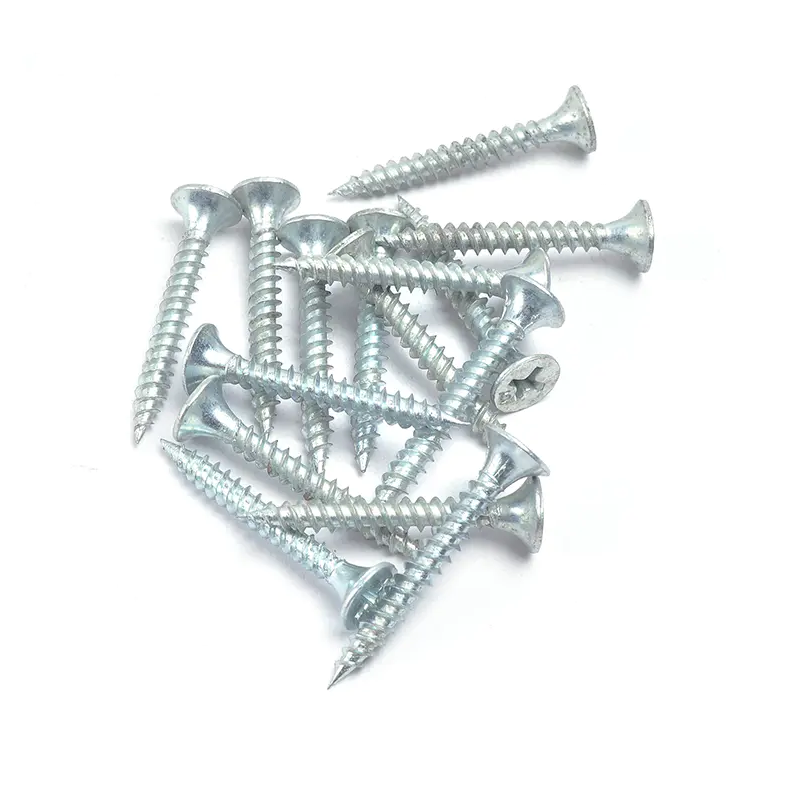
For buyers, choosing a Drywall Screws Factory is therefore about more than comparing product photos or purchase prices.
The factory behind the screws can influence material selection, production control, surface treatment, inspection, packaging, and order management. These details may not be obvious when looking at a finished box of screws.
A suitable factory should match the buyer's application, purchasing needs, and expected product consistency.
This has made factory evaluation an important part of construction fastener sourcing. Instead of focusing on one feature, buyers can look at the complete manufacturing process.
Why Does Factory Capability Matter When Choosing Drywall Screws?
The production process can influence the consistency of finished screws.
A factory needs to manage several stages. Materials must be selected and prepared. Screw forming needs to follow an organized process. Surface treatment may be applied. Finished products need to be checked and packed.
Each stage can affect the final product.
A factory with a clear manufacturing process can make these activities easier to manage.
| Factory Feature | Why It Matters |
|---|---|
| Material Management | Creates a consistent starting point for production |
| Screw Forming | Helps maintain product shape and appearance |
| Surface Treatment | Supports consistent surface condition |
| Equipment Management | Helps keep production stable |
| Quality Inspection | Identifies production differences |
| Packaging | Protects and organizes finished products |
| Order Management | Helps coordinate different customer requirements |
This does not mean that every buyer needs the same type of factory.
A small distributor may have different requirements from a large construction materials supplier. A buyer serving one market may also need different products from a company serving several construction sectors.
The important point is compatibility.
The factory should be able to support the buyer's actual needs.
What Should Buyers Look for in a Drywall Screws Factory?
A factory evaluation can begin with several simple questions.
Does the factory understand drywall screw applications?
Can it produce different product types?
How does it manage incoming materials?
How are finished products inspected?
Can it maintain consistency across repeat orders?
These questions help buyers look beyond the sales process.
Manufacturing experience can also matter.
A factory familiar with drywall screws may have a clearer understanding of common product requirements. It may also have established processes for production, inspection, and packaging.
This does not automatically make one manufacturer suitable for every buyer.
Application remains important.
Drywall screws may be used with different materials and construction systems. The buyer should explain the intended use so the factory can understand what type of product is required.
Good communication at the beginning can prevent confusion later.
It can also help the factory identify whether a standard product is appropriate or whether another arrangement should be considered.
How Does Material Selection Influence Drywall Screw Production?
Material selection is one of the earliest decisions in manufacturing.
The metal used for a screw can influence its strength, appearance, forming behavior, and surface treatment.
A factory therefore needs a clear system for handling raw materials.
Incoming materials can be checked before entering production. Storage should also be organized so that different material batches are not mixed unnecessarily.
This creates a more stable manufacturing starting point.
Material consistency also helps production workers.
If the material behaves differently during forming, production conditions may need to change. Frequent changes can make consistent output more difficult.
A factory with organized material management can reduce this uncertainty.
Buyers can ask where materials come from and how incoming materials are checked.
They can also ask how material batches are identified during production.
These questions may seem simple.
They can provide useful information about how seriously a factory approaches manufacturing control.
Why Is Production Equipment Important?
The equipment used to make drywall screws has a direct role in the production process.
Machines form the screw body, create the head and drive features, and prepare the product for later stages.
Equipment condition can influence production stability.
Regular inspection and maintenance can help identify wear or other issues before they affect a larger production batch.
A factory may also use different equipment for different product types.
This makes equipment flexibility useful when a buyer needs more than one screw design.
Production equipment does not need to be judged only by how modern it looks.
The more important question is whether the equipment is suitable for the products being made and whether the factory can keep it in stable working condition.
Good production management can matter more than appearance.
For buyers, a factory visit can sometimes provide valuable insight.
An organized production area, clear material flow, and visible inspection procedures can reveal how manufacturing is managed.
How Does Surface Treatment Affect Drywall Screw Selection?
Surface treatment is an important part of drywall screw production.
The surface can influence appearance and may also affect how the product performs in its intended environment.
Different construction applications can create different expectations for screw surfaces.
Some buyers may focus on general indoor use. Others may have specific requirements related to storage, handling, or environmental conditions.
The factory should understand these requirements before recommending a surface treatment.
Consistency is important here.
A batch should have a reasonably uniform surface appearance and condition.
Uneven treatment can create differences that become visible to buyers or distributors.
The treatment process should therefore be managed as part of the overall production system.
It should not be viewed as an isolated step.
Material selection, forming, surface treatment, inspection, and packaging are connected.
A change in one area can affect another.
Which Quality Control Practices Matter Most?
Quality control is one of the useful areas to discuss with a Drywall Screws Factory.
A factory should have a process for checking products during production and after production.
Inspection may include product shape, head formation, thread condition, surface appearance, and packaging.
The exact inspection points depend on the product.
What matters is that the factory has a repeatable approach.
A useful quality process can include several stages:
Incoming material inspection
Materials are checked before production.
Production inspection
Products are reviewed while manufacturing is taking place.
Surface inspection
Finished surfaces are checked after treatment.
Final product inspection
Completed screws are reviewed before packaging.
Packaging inspection
Product identification and packaging condition are checked before shipment.
This approach creates several opportunities to identify problems.
It also allows the factory to investigate the cause of a variation instead of simply finding it after delivery.
For repeat buyers, this can be particularly important.
A buyer may place several orders over time. Consistent manufacturing practices can help reduce differences between orders.
Can a Drywall Screws Factory Support Different Customer Requirements?
Construction fastener buyers do not always have identical needs.
Some purchase standard products in regular quantities. Others need several screw types for different applications.
A flexible factory can be useful in these situations.
Flexibility may involve product selection, packaging, labeling, order arrangements, or production planning.
It does not necessarily mean that every product can be changed without limits.
Instead, the factory should be able to explain what can be adjusted and what should remain standardized.
| Customer Requirement | Factory Capability to Consider |
|---|---|
| Several screw types | Product range and production flexibility |
| Different packaging | Packaging and labeling capability |
| Repeat orders | Production consistency |
| Different construction applications | Application knowledge |
| Product changes | Design and production coordination |
| Distributor requirements | Order and packaging management |
Clear communication is particularly important when customized requirements are involved.
The buyer needs to explain the actual purpose of the product.
The factory can then determine whether its existing production process is suitable.
This is more practical than requesting changes simply for the sake of customization.
How Can Buyers Evaluate a Factory Before Ordering?
A factory's website can provide useful information, but it is only part of the evaluation.
Buyers can ask for product information, production details, inspection procedures, packaging examples, and other relevant materials.
They can also compare how different factories answer similar questions.
A clear answer can be useful.
A vague answer may indicate that more information is needed.
A buyer can create a simple evaluation list:
Manufacturing
- Does the factory have experience producing drywall screws?
- Does it have an organized production process?
- Can it handle the required product range?
Quality
- How are raw materials checked?
- How are finished screws inspected?
- How are production issues handled?
Product
- Does the product match the intended construction application?
- Are different screw designs available?
- Can product requirements be discussed before production?
Packaging
- Is the packaging suitable for storage and transportation?
- Can products be clearly identified?
- Can packaging requirements be discussed?
Communication
- Does the factory understand the application?
- Are production questions answered clearly?
- Can repeat orders be managed consistently?
This type of evaluation does not require complicated analysis.
It simply creates a structured way to compare suppliers.
Why Does Order Consistency Matter for Long-Term Buyers?
A buyer may be satisfied with one shipment but still face problems if later orders differ noticeably.
This is why repeat-order consistency deserves attention.
A factory needs to maintain records and production procedures that help reproduce the same product requirements.
Product identification can help.
Material records can help.
Production procedures can help.
Inspection records can also provide useful references.
The purpose is not to eliminate every natural difference in manufacturing.
The goal is to keep the product aligned with the agreed requirements.
This becomes particularly important for distributors.
A distributor may sell the same drywall screw product repeatedly. Customers may expect the product to remain familiar from one purchase to the next.
A factory that manages repeat production carefully can make this process easier.
Communication also continues to matter.
If a factory needs to change a material, production method, or packaging arrangement, the buyer should have an opportunity to understand how the change could affect the product.
Transparency can make long-term cooperation easier to manage.
For buyers searching for a suitable Drywall Screws Factory, the useful evaluation is rarely based on one feature. Material management, production equipment, manufacturing procedures, surface treatment, quality inspection, packaging, flexibility, and communication all contribute to the factory's overall capability.
The right choice depends on the intended application and purchasing model. A factory that can connect its manufacturing process with those requirements can make the sourcing process clearer and help buyers maintain greater consistency across their drywall screw orders.

 Quick Links
